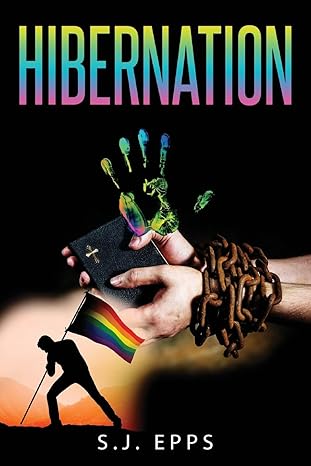
Hibernation by SJ Epps
Set in a near-future America, S.J. Epps’s novel Hibernation explores a provocative scenario: what if the cultural and moral order of society were suddenly flipped on its head?
The premise imagines an America transformed into a self-proclaimed “rainbow nation” in the aftermath of legalized same-sex marriage. In this upheaval, churches find themselves under siege: lawsuits proliferate, ministers face jail for standing by their beliefs and even peaceful public events erupt into chaos.
Epps uses this dramatic backdrop to craft a faith-centered thriller that is as bold as it is thought-provoking, examining the fault lines that appear when convictions collide with a new social order.
A Society Flipped on Its Head
In Hibernation’s dystopian vision, tensions between the empowered LGBTQ+ community and conservative religious groups reach a boiling point. Epps paints this world in vivid detail, immersing the reader in a society fraying at the seams. The sense of chaos is palpable and eerily credible. Courtrooms overflow with legal showdowns over religious freedom, and news cameras capture every confrontation.
By envisioning a near-future America where the “outrage” of one side becomes the law of the land for the other, Hibernation flips the script on contemporary cultural conflicts. The result is a narrative charged with suspense and urgency, one that forces its characters — and readers — to navigate a world where moral certainties have been upended.
Pastors in the Crossfire
At the heart of the novel stand two clergymen who refuse to go quietly.
Pastor Simon Charles’s steadfast convictions land him behind bars after he declines to officiate a same-sex wedding — a dramatic flashpoint that turns him into both a martyr and a lightning rod in the unfolding culture war. As Simon languishes in a jail cell awaiting an uncertain fate, legal battles rage outside; enter Spencer and Milton, two determined lawyers who take up the cause of businesses and individuals penalized for adhering to traditional beliefs.
Through Simon’s storyline, Epps infuses the novel with the tension of a courtroom thriller, complete with high-stakes legal gambits and the looming threat of government force.
Meanwhile, Pastor Winter Sams fights a more intimate battle. At home, Winter struggles to keep his family life intact under extraordinary pressure. His wife is gravely ill — a fact they hide from their two young children. But Winter is also hiding something even more precarious: his homosexual identity.
Outwardly, he stands at the pulpit preaching against the “rainbow revolution,” shoulder-to-shoulder with Simon. Inwardly, he is the very thing his church condemns, a man of God carrying a secret that could destroy his career, his marriage and his sense of self. Epps handles this character with empathy and nuance, never resorting to caricature. Winter’s struggle is rendered in human terms — the anguish of a person torn between faith and identity — and it lends Hibernation a deep emotional core.
As the public crisis escalates, Winter’s private turmoil raises the stakes: will he continue living a lie to maintain his standing, or will the truth come exploding out amid the chaos?
High Stakes and Powerful Themes
Though Hibernation unfolds as a suspenseful political and religious thriller, it is equally a story about people grappling with change, fear and conscience. By reversing the usual dynamic, the novel explores issues of tolerance, freedom and empathy from an unexpected angle.
Epps does not offer easy answers or take sides; instead, she presents the clash of values in all its complexity. The novel asks readers to consider the cost of staying true to one’s beliefs when the whole world seems to have flipped overnight.
Thematically, Hibernation is rich and thought-provoking. It touches on religious freedom, the meaning of family, personal integrity and the consequences of cultural polarization. Through it all, Epps keeps the narrative personal. The story alternates between explosive public events and quieter scenes of family and friendship. This layered storytelling blends legal drama, social commentary and intimate character study.
The pacing remains steady and assured; while not a non-stop action romp, the book maintains a taut sense of momentum that makes it hard to put down. Each chapter adds a new wrinkle, whether it’s a fiery courtroom exchange or a fraught domestic conversation, keeping the reader invested in multiple interwoven plotlines.
A Cautionary Tale and Emotional Journey
As the title suggests, Hibernation is about awakening: communities long dormant roaring to life, and individuals forced to confront truths they’ve buried. By the final chapters, the tension reaches a crescendo that is both gut-wrenching and illuminating.
Epps resists wrapping things up too neatly. Rather than a tidy conclusion, what Hibernation offers is a mirror — one that shows us a society not so unlike our own, taken to an extreme.
Hibernation succeeds as both a thrilling cautionary tale and an emotional journey of faith. It’s a novel that will appeal not only to fans of suspense and dystopian fiction but also to readers interested in the intersection of religion and social change. With complex characters and a narrative that moves deftly between the personal and the political, S.J. Epps delivers a story that is engaging, timely and brimming with heart.
About SJ Epps:
 Born in the deep south, affectionately known as The Bible Belt, SJ Epps has always been fascinated by civil right issues and things going on in the community from an early age. How people behave when faced with adversity or how they are triggered has always created a stir in the author’s curiosity. When the creative juices begin to flow, the author often finds herself inviting colorful and captivating characters to take up residence in her mind ever so often.
SJ Epps is a Gulf War Veteran and has a career in the medical profession. She is an avid reader as well as a writer with a particular interest in compelling fiction novels. She lives in North Texas with her husband.