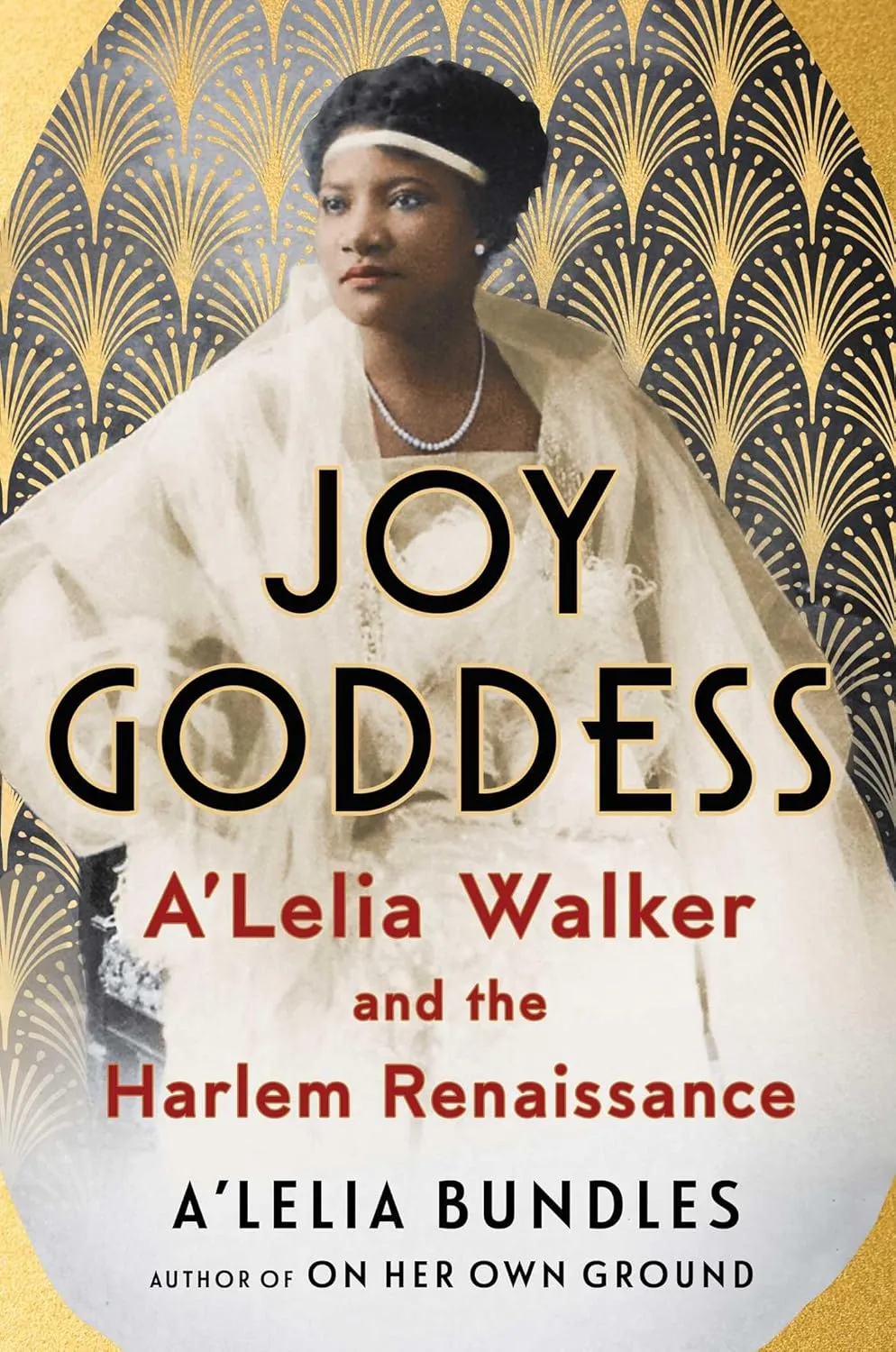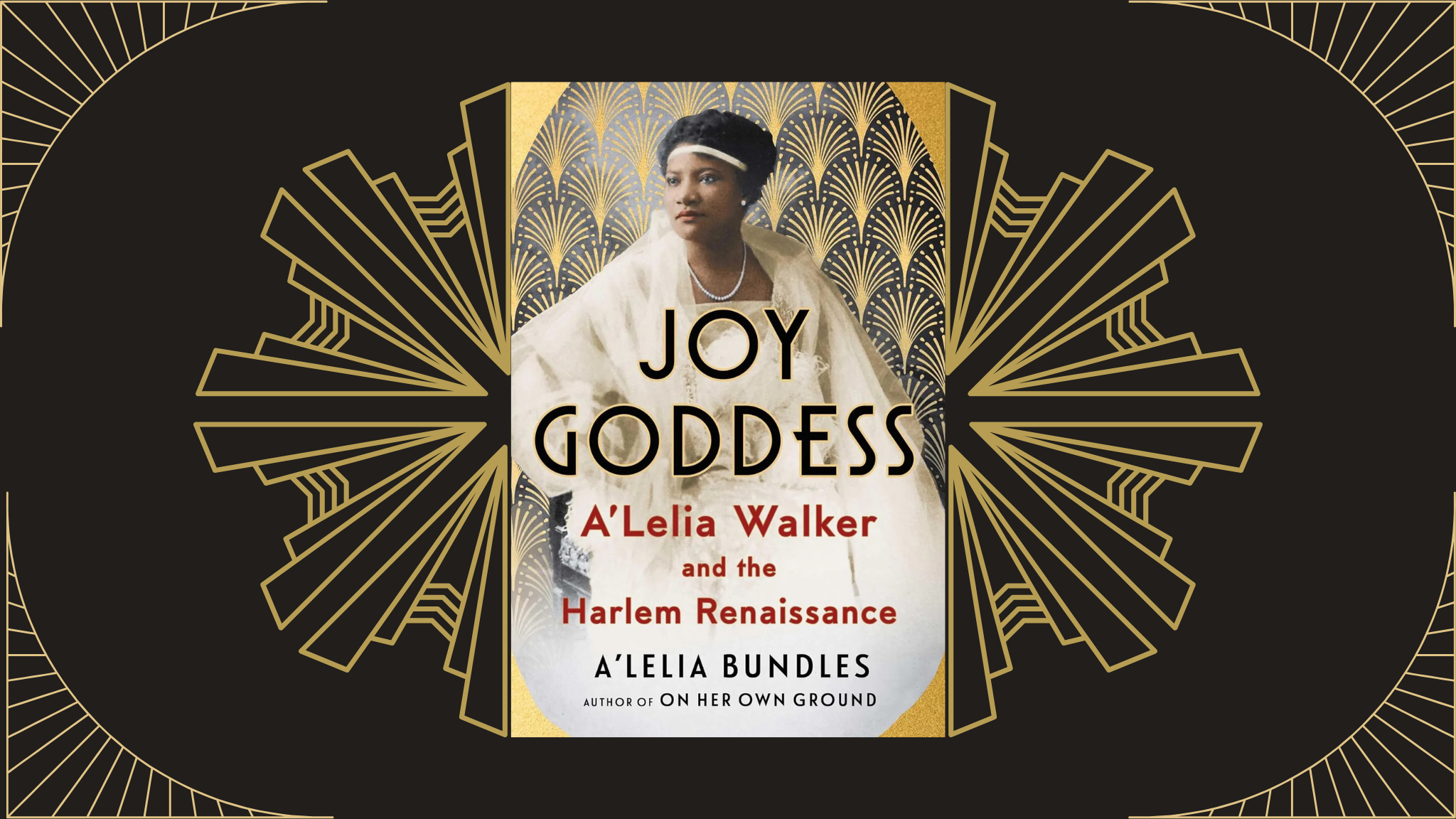
Joy Goddess: A'Lelia Walker and the Harlem Renaissance by A’Lelia Bundles
Romance eluded her, friends betrayed her, and she lacked her mother’s sharp instincts for business and philanthropy. But the heiress with intense eyes and fabulous style, who loved poetry and parties, turned out to be one of the twentieth century’s intriguing protagonists.
She was A’Lelia Walker, the subject of an enlightening new biography, Joy Goddess: A’Lelia Walker and the Harlem Renaissance by A’Lelia Bundles, an author and producer who happens to be Walker’s great-granddaughter. Bundles is well-armed, having previously written a biography of her great-great-grandmother, Madame C.J. Walker, a Black entrepreneur who became the nation’s first self-made woman millionaire.
A Beauty Empire
Born just after the Civil War ended, Madame Walker overcame poverty and abuse as she made her way through the nightmare of Reconstruction Era America. Escaping from her first awful husband (A’Lelia’s father), Madame moved from Vicksburg, Mississippi, to St. Louis to Indianapolis, her young daughter in tow. She was eking out a living as a washwoman when her own hair loss inspired her to create products and treatments, which she eventually assembled into a beauty empire.
Along the way, many helped build the company, notably lawyer and general manager Freeman Ransom, a trusted advisor who tried to rein in Madame and A’Lelia’s spending after they moved to New York in 1916. There, the women purchased two townhouses and a pied-à-terre in Harlem along with a mansion overlooking the Hudson River, all of which A’Lelia decorated as lavishly as she and her mother dressed themselves.
After Madame died in 1919, A’Lelia promptly wed Dr. Wilson Wiley — a marriage her mother had opposed. Facing new challenges as president of the company and, sadly, as a neglected wife, A’Lelia became a searcher. For the rest of her life, she would travel the world in pursuit of adventure, rest and happiness. But Harlem always called to her: the glorious place in her heart and soul where she welcomed the Black intelligentsia and artists to her glittering salons.
Harlem Renaissance
The Harlem Renaissance spanned two decades, roughly 1920 to 1940. This movement became a vast expression of culture and intellect among Black authors, sculptors, musicians, dancers, poets, painters, architects, singers, activists, bandleaders … These were extraordinary times.
During those years after World War I, everyone wanted to come to Harlem, a vibrant northern Manhattan neighborhood bordered on the east by the Harlem River. While Black arts and erudition flourished, however, so did Jim Crow. The Great War, as it was known, had offered false promises of equality for Black soldiers who fought in a segregated military and returned to a racist, violent nation. Most Black Americans faced limited opportunities.
Supporting Black institutions and initiatives grew ever more important. Madame Walker’s bequests had totaled $2 million in today’s dollars, the author notes. More than 30 individuals and organizations benefited.
A’Lelia, who squandered money on over-the-top events, such as the wedding of her adopted daughter Mae Walker, did not adhere to her mother’s philanthropic tradition.
Creating Black Spaces
Her generosity took a different form. A’Lelia was committed to “the black nation-within-a-nation,” an expression coined by her friend, writer Geraldyn Dismond. Thus, she focused on welcoming Black artists and socialites to comfortable venues, like the clubs that white people took for granted.
“She wanted to create a space with music, art, and poetry that would appeal to cosmopolitan Harlemites as well as to her widening circle of downtown and international friends,” writes Bundles.
If A’Lelia had imagined a Bohemian hangout, she ended up with a spectacular social scene. That seems to have been enough for her. And there were plenty of distractions during the 1920s. While A’Lelia was an indifferent steward of the company she inherited, a few of her business initiatives were successful. She enjoyed visiting Los Angeles and spas in the Southwest.
Poignant Historical Account
Echoing her mother’s behavior, she meddled in her own daughter’s marriage.
Love never came to A’Lelia, however. She divorced Wiley and remarried Dr. James “Jack” Kennedy, who spent their marriage in Alabama, where he studied shell-shocked Black veterans. Eventually, A’Lelia divorced Kennedy.
A’Lelia Bundles has written a meticulously researched biography. Joy Goddess is also a poignant history of A’Lelia’s time: the early twentieth century, when Black Americans continued to make important contributions to culture and society, but laws, anger, and prejudice still blocked their way.
About A’Lelia Bundles:
 A’Lelia Bundles is the author of New York Times Notable Book and bestseller On Her Own Ground: The Life and Times of Madam C. J. Walker. A former ABC News Washington, DC, deputy bureau chief and an Emmy Award–winning producer, she participated in residencies at Yaddo and MacDowell while writing Joy Goddess. Visit her website at ALeliaBundles.com or on Instagram at @ALeliaBundles.