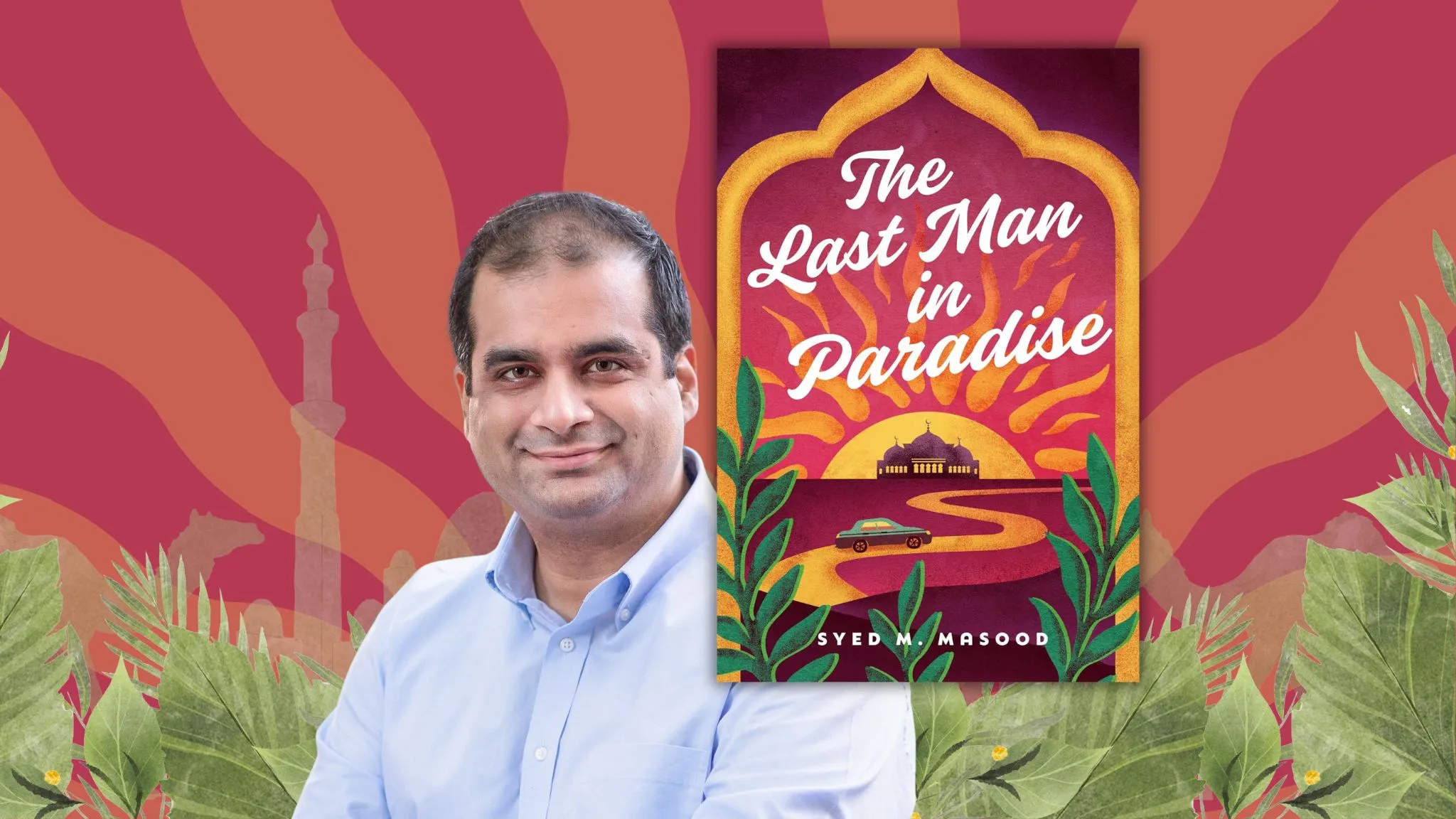
Azaan, the protagonist of The Last Man in Paradise, surprised me.
I suppose that sounds a bit bizarre coming from an author — after all, I created Azaan and I wrote out everything that happened to him. I ought to have had full control over him and, therefore, he should’ve been entirely predictable for me.
The creative process doesn’t work that way. At least it doesn’t work that way for me — not when it is going well, at least. When I’m really onto something, when “my fingers emit sparks of fire with expectation of my future labors,” it feels like my characters have taken on a will of their own. They won’t agree to do things they don’t feel like doing for trivial things like plot. They are people, in my mind, and in the world they inhabit they demand and expect agency.
I have no choice but to give it to them, because otherwise they stop cooperating entirely and everything falls apart. Azaan used this freedom, more than any character I’ve written before, to challenge me.
Now, he was always meant to be a rebel. The irreligious son of a strictly religious imam, he was supposed to question the dogmas and theology to which his father had devoted his entire life. A lapsed Muslim with no use for the faith, he was meant to examine the way Islam was being practiced by those around him and determine for himself if those actions were moral.
He wasn’t meant to turn his critical eye on me and my beliefs, which are — I am forced to admit — liberal. I am a big believer, for example, in the idea of America being a melting pot, in the virtue of not only tolerating but celebrating the differences that make up the cultural mosaic of this country.
But after he was literally whipped by his father for the sin of drinking alcohol, in pain and bruised, Azaan asked: “This was good, right? This was tolerance. This was America.”
He was asking, in other words, if maybe some worldviews ought to not survive the melting pot but rather dissolve in it. It is easy to state blanket platitudes cheering on all cultures and values as being equally valid. But Azaan was reminding me (and the reader) that this is a luxury belief when you yourself aren’t in peril.
I, for a moment, let the real world intrude into this discussion of literature.
I’ll pause here in memory of 14-year-old Hira Anwar, born in the US, who was flown to Quetta, Pakistan for the ‘crime’ of posting on Tik Tok and thereby bringing ‘shame’ on her family. She was murdered there by her father and other members of her family.
And I take this moment to concede that Azaan was right.
This wasn’t the only challenge he posed to me either. He challenged my views on the importance of identity and representation in Art and even cringed at a word now commonplace, Islamophobia, when he thought it was misapplied.
My ‘hero’, it turned out, wasn’t simply interested in challenging the views I wanted him to challenge, but was in fact inclined to turn his cynical, questioning glance my way too.
It was not an altogether comfortable experience, but it was, I think, an important one. We hear a great deal of talk these days about echo chambers and bubbles, about how profit-driven algorithms either cocoon us in the safe company of like-minded people or set us like ravenous ideologues upon those who disagree to generate engagement.
In all the noise of our world, it seems that people rarely interrogate their own beliefs with the same vigor they direct at their opponents. Everyone is sure of being right and, while writing other works, I’ll admit that I too have fallen prey to such fragile and unexamined certainties.
Azaan refused to let me have such comfort.
I hope he’ll be equally discourteous to my readers.
The Last Man in Paradise is a book about questioning your views and your beliefs — yes, the humor is directed at the absurdly religious, but it is a theme which applies universally. Nothing and no one is above interrogation, not even a creator.