Every Christmas, my partner and I challenge ourselves to make it through one Hallmark movie. We never get more than twenty minutes in. Watching happy people during the holidays is our own private form of torture. No one even dies.
I write psychological thrillers for a living. My brain wants conflict. Someone has a secret. Someone makes a terrible decision. Someone realizes what it’s like to have a three-inch blade slide between their ribs.
Dark thrillers entertain me any time of year; my interest in deeply disturbed people doesn’t take December off. But there’s something especially satisfying about reading a dark book during the holidays, when so much of what surrounds us insists on being cheerful.
I love Christmas. I also reach a point when I’ve had enough sweetness. Between the commercials, the music and the movies in which everyone learns what really matters, I start to want someone to make a decision they can’t take back. I still want a happy ending, but I want someone to have suffered mightily to get there.
A thriller satisfies my craving to observe struggle. There’s a problem to solve, a person to worry about and a reason to turn the page. For a few hours, the shopping and unanswered emails can wait. Someone is missing, and her husband’s explanation has holes in it.
The holidays seem to bring out the dark in me. But I’m not alone: darkness has been part of our holiday entertainment for a long time.
A Christmas Carol is about ghosts and remorse. A dead business partner turns up in chains, and Scrooge spends the night confronting painful memories, human suffering, and his own mortality. We’ve made it comforting through repetition. The man himself goes through hell.
The Grinch breaks into people’s houses and steals their belongings because he can’t stand hearing them enjoy themselves. And he looks like an exorcism-puke version of the Boogeyman.
Then there’s Home Alone. Kevin defends his house with broken glass, a blowtorch, and an iron dropped onto a man’s face. Let those injuries have realistic consequences, and you have a fucking horror movie. We watch it with our kids every December.
And I consider Die Hard a Christmas movie. In fact, I’ve been telling people my latest thriller, When They Find Me, is my Die Hard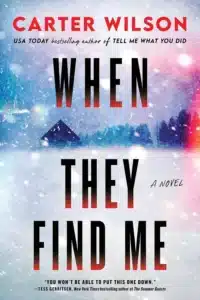 novel.
It takes place two days before Christmas in a remote Colorado town, where Annie Wolfe has spent four years hiding with her twelve-year-old daughter, Coral. When three intruders break into their house during a historic blizzard, they discover Annie has prepared for the possibility of being found.
They picked the wrong house.
It doesn’t take much to turn that setting from comforting to terrifying. Snow outside the window is beautiful until you realize you can’t leave. A remote house offers privacy until you need someone to hear you. You can spend the afternoon admiring the woods and the evening wondering who’s in them.
And sometimes my brain goes there before anything has happened. Everyone is together. The food is good. There’s a fire going. I can appreciate all of that and still wonder what would happen if someone started pounding on the door.
Psychologists study something called morbid curiosity, our interest in information about death, violence and danger. Researchers have found that people will sometimes choose to view disturbing material even when they have other options.
I suspect the holidays give that curiosity particularly good material. We put so much effort into making everything feel warm and safe that the possibility of something going wrong becomes hard for me to resist. As a writer, I start asking questions. Who wasn’t invited? What did someone bring into the house? Why has the dog been staring at the window?
As a reader, I want someone else to take those questions further. Let me stay besides the fire and find out.