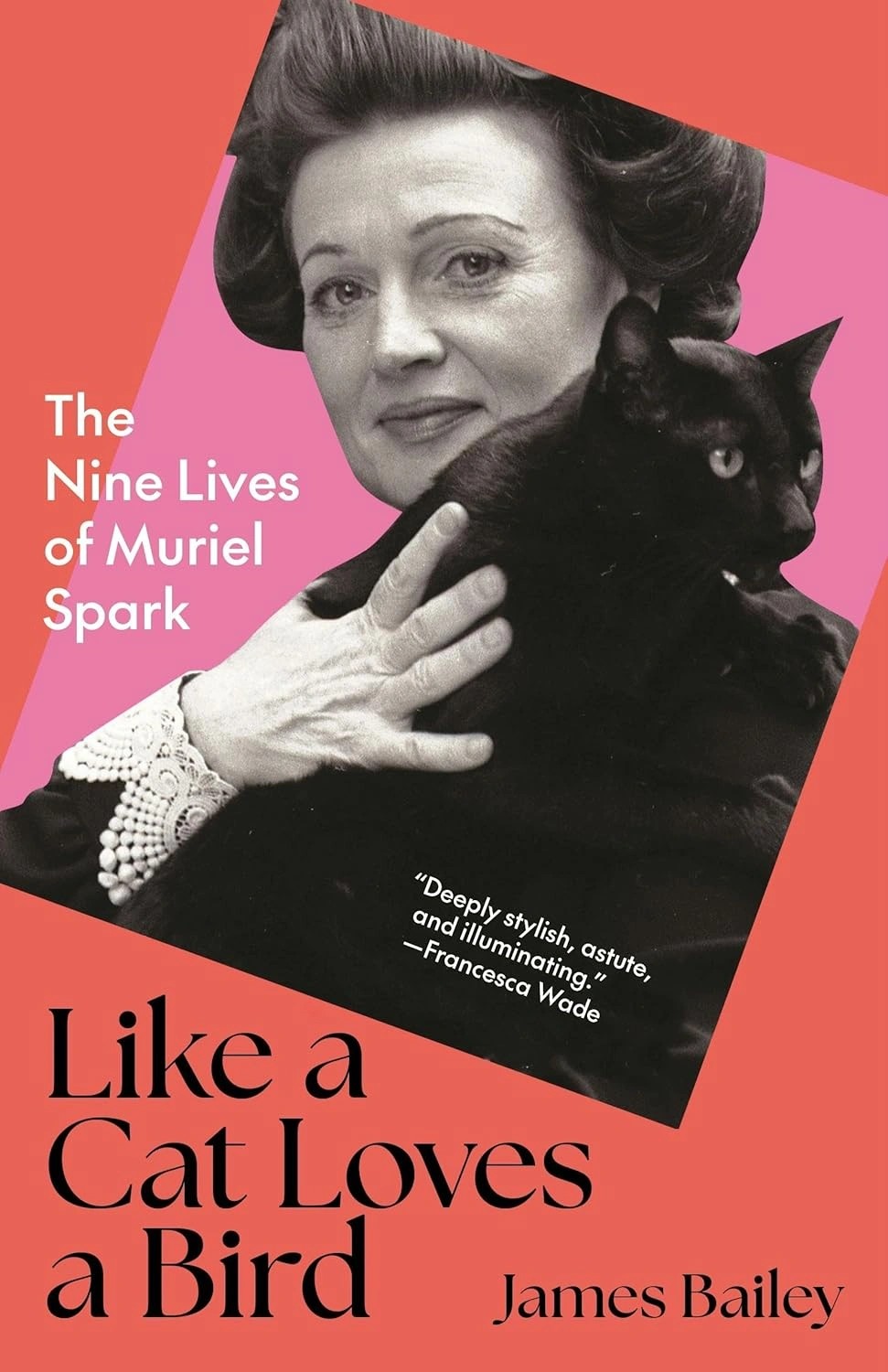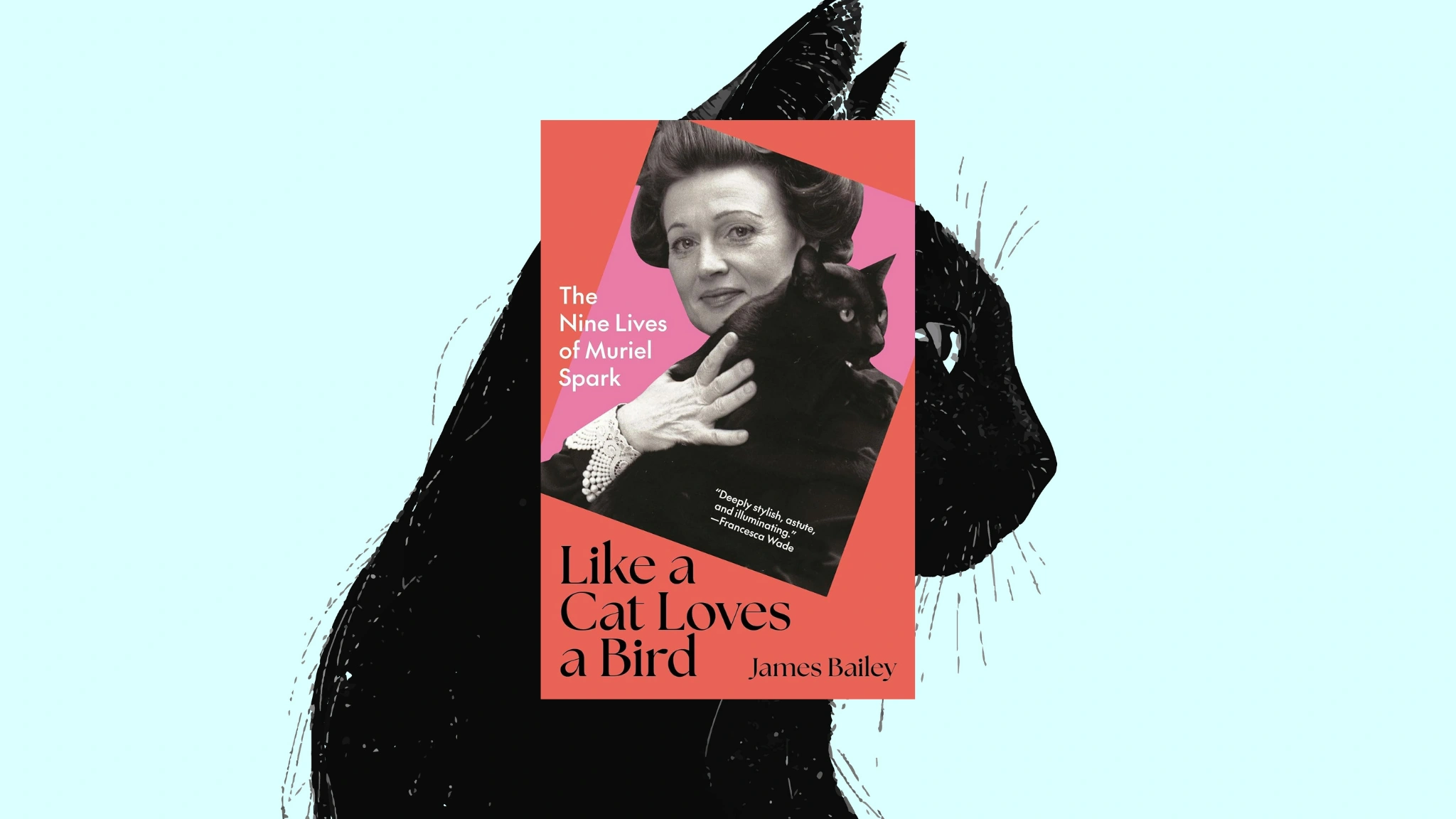
Like a Cat Loves a Bird: The Nine Lives of Muriel Spark by James Bailey
James Bailey earned a doctorate in literature and has proven himself to be an insightful, exceptionally rigorous researcher while becoming the foremost expert on the brilliant, enigmatic iconoclast Dame Muriel Spark. He wrote Muriel Spark’s Early Fiction: Literary Subversion and Experiments with Form. Like a Cat Loves a Bird: The Nine Lives of Muriel Spark succinctly and most delightfully conjures up her mercurial, darkly sardonic wit and the autobiographical details cleverly hidden in some of her devilishly plotted, concise novels, short stories, essays and poetry.
Unearthing the Woman Behind the Work
For both of these nonfiction works, James Bailey dove deeply into the Muriel Spark archives at the National Library of Scotland in Edinburgh and the McFarlin Library at the University of Tulsa, which house her manuscripts and research folders, including incomplete writing projects. Given the gargantuan volume of archival materials available, it constituted both a researcher/writer’s dream and nightmare. This lifetime accumulation, comprised of an unfinished novel, notebooks, research folders, multiple diaries, personal and business correspondence, contracts, income statements, and even mundane receipts for household bills and personal services such as her grocer and hairdresser, demanded tremendous stamina and determination from the researcher. We learn that Muriel Spark weeded out friends and lovers far more readily than scraps of paper.
The Rituals and Revelations of a Literary Life
Writing took precedence and included ritualistic behaviors; all novels were first hand-written with new pens from comprehensive notes penned in spiral-bound notebooks sold by Edinburgh stationer James Thin. Leaving the left side blank for notes, ideas, and any revisions, she wrote on the right-hand pages. When the firm discontinued the notebooks, Thin continued to produce custom orders for her. Spark used separate sheets for each character containing comprehensive descriptions, characteristics, and their relationships, delineated along with drafted dialogue. Typically she used five notebooks to complete each novel and claimed in interviews she didn’t rewrite or correct her work.
In addition to essays, short stories and poetry, she produced 22 novels, including The Ballad of Peckham Rye, The Girls of Slender Means, A Far Cry From Kensington and others, with The Prime of Miss Jean Brodie (1961) being the most widely known. Vanessa Redgrave starred in the original stage production of the novel before Maggie Smith immortalized the character on screen and helped bring Muriel Spark greater renown and tremendous financial success. Other works were honored with the James Tait Black Memorial Prize, the Ingersoll Foundation T. S. Eliot Award for Creative Writing, the David Cohen Prize and the Golden PEN Award for a “Lifetime’s Distinguished Service to Literature” in 1998. She was twice shortlisted for the Booker Prize, received eight honorary doctorates, and named an Officer of the Order of the British Empire in 1967 and later invested as Dame Commander of the Order of the British Empire by Queen Elizabeth II for services to literature.
Muriel Sarah Camberg was born in Edinburgh, Scotland, during the last year of the Great War on February 1, 1918, to a Jewish father and Protestant mother who already had a five-year-old son. After education at James Gillespie’s School for Girls and Heriot-Watt College, she was well read, already writing, and ready to experience the world. James Bailey writes, “In 1936, there were three things that eighteen-year-old Muriel wanted: to see the world, have sex, and escape all forms of housework.” Trim, stylishly dressed with fiery red hair, gray-green eyes, and fair, freckled skin, Muriel had a striking appearance, a quick mind, and singularly poor judgment when it came to marriage. Fourteen years her senior, math teacher Sydney Oswald Spark did not dance and, more significantly, did not reveal his violent temper, abusive nature, and diagnosed mental illness until after they wed. In 1938, she moved to Southern Rhodesia (Zimbabwe) for his three-year teaching contract, where their son Samuel Robin Spark was born ten months later.
Reviving the Legacy of a Singular Iconoclast
As travel by sea with children was prohibited in 1944, the now divorced Muriel placed Robin in a convent school and returned to England on a troop ship. When travel restrictions ended, Robin was moved to Scotland, where he was raised by her parents. Abandoning her son had a lifelong negative impact on their relationship, and forty years of attempted mitigation with financial support and extravagant gifts failed to avert eventual complete estrangement.
After returning to England and working for British intelligence until wars ended, she began editing The Poetry Review, writing prolifically, and achieving her first great success with the publication of Memento Mori in 1959. By this time, she had converted to Roman Catholicism. Another relationship was doomed to failure as her lover selfishly consumed her meager government rations, later adding insult to injury by selling their personal correspondence. Success, conspicuous consumption, and a social whirl were the hallmarks of her years in New York City. Quiet contemplation and a desire to see Italy took her next to Rome, where in 1968 she met and hired artist, sculptor, and writer Penelope Jardine to be her secretary. Muriel died at the age of 88 on April 13, 2006, in Tuscany, Italy, at the home she shared with Penelope, who had become her literary executor and sole heir.
The apex of her fame has passed, and aside from the enduring success of The Prime of Miss Jean Brodie, her work has been sadly overlooked. The release of James Bailey’s Like a Cat Loves a Bird: The Nine Lives of Muriel Spark provides a remarkably fresh and new perspective on a life fully lived and a legacy of literary splendor, and one can optimistically hope for a resurgence of interest in Muriel Spark, the crème de la crème.
About James Bailey: