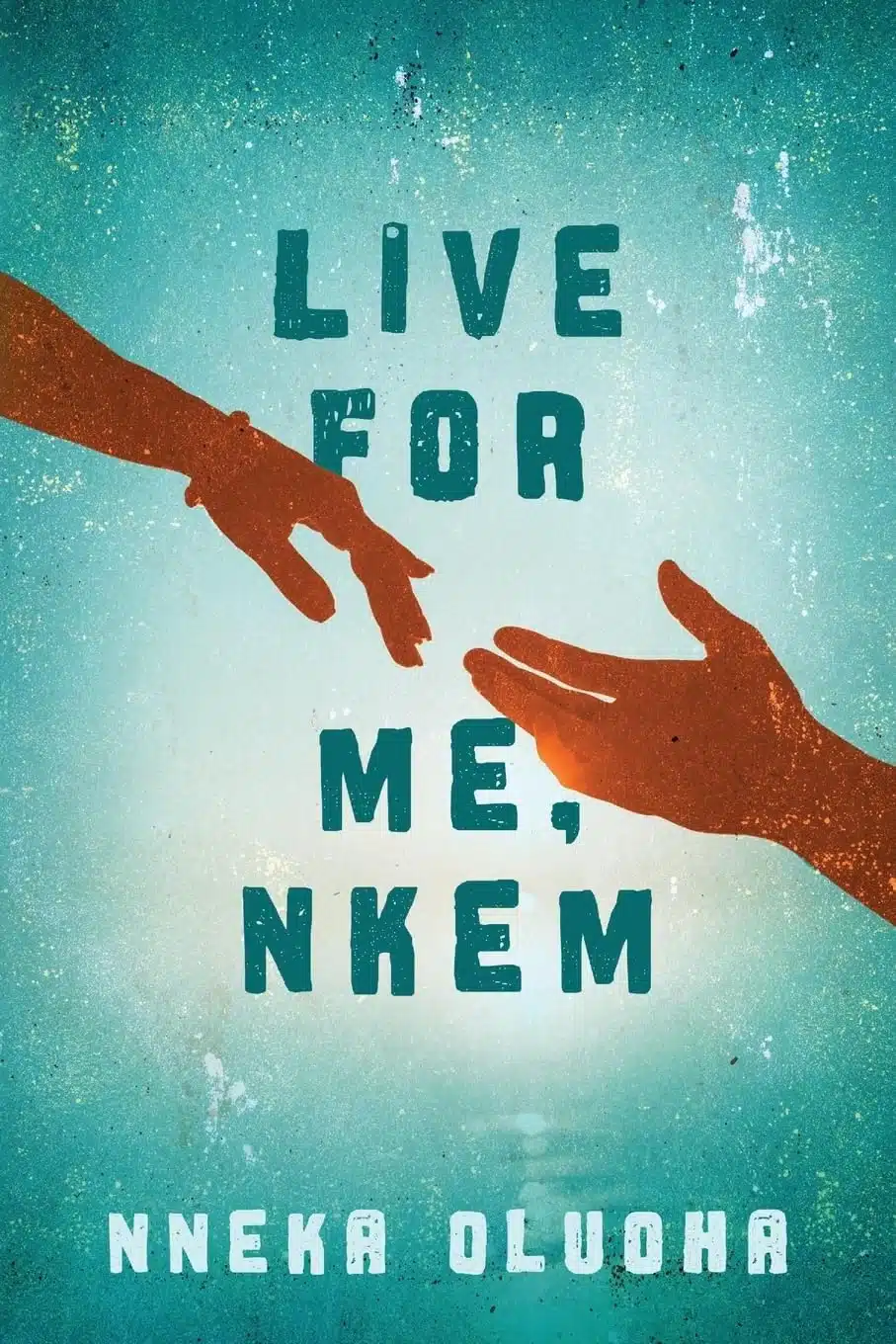
Live for Me, Nkem by Nneka Oluoha
Live for Me, Nkem, is a book about depression that pulls you inside a mind that is quietly shutting down. Nneka Oluoha‘s debut is an emotionally honest portrait of maternal depression and it braids that portrait into a richly rendered Nigerian American family.
Nkem Ezenwa has the life immigrant parents dream of for their children: a devoted husband, four kids, a house in the suburbs, a career and a community that looks at her marriage with something close to envy. Oluoha spends her opening chapters establishing how convincing that surface is by showing a squabble over stolen makeup, a teasing exchange about a husband’s vanity and the domestic choreography of a busy household before letting the cracks show. What makes the unraveling so effective is how it’s delivered through absence: missed school plays Nkem can’t remember, new furniture she never noticed, a silence in a room she used to fill with music. The dread builds through erosion.
Disappearing in Plain Sight
The decision to shift point of view and dip into the perspective of Nkem’s eleven-year-old daughter Toochi is a clever structural choice. Seeing Nkem’s closet-hiding and flattened affect through a child’s confused, half-frightened eyes does more to convey the family’s helplessness than any amount of interiority could. It reframes everything that comes before it.
In her author’s note, Oluoha explains her choice to render dialogue in Anambra dialect rather than standardized Igbo, and to leave some phrases untranslated or translated only through context. The Igbo woven through the family’s conversations becomes thematically resonant: this is a story about what happens when people can’t find the words for what they’re carrying, and the novel’s own bilingual texture embodies that struggle formally, not just in its plot.
The book refuses to offer a tidy villain. Nkem’s mother is not cruel; she is a product of her own generation’s silence, and the novel lets that complexity sit uncomfortably rather than resolving it into forgiveness or condemnation. Chima, Nkem’s husband, could easily have been written as either oblivious or saintly; instead he’s a man doing his best against something he doesn’t have the vocabulary to name, and his fumbling, persistent love is one of the book’s triumphs. Even the cultural stigma around mental illness in the Nigerian immigrant community is handled with nuance. Oluoha, herself a physician, clearly understands both the medical realities of depression and the specific cultural forces that can keep someone from naming it, and she indicts neither medicine nor culture wholesale.
The Slow, Imperfect Work of Healing
This is a book about severe depression and suicidal ideation, portrayed with specificity, including a harrowing sequence in which Nkem begins quietly preparing for her own death. Readers for whom this subject matter is close to home should go in with that awareness. The path toward Nkem’s diagnosis, treatment, and tentative healing in the final chapters is handled with the same care as the descent. The epilogue, set in a psychiatrist’s office, is especially well done as it’s funny, guarded and moving all at once, and honest about the fact that healing is a process rather than a finish line.
Live for Me, Nkem is about depression, yes, but also about the loneliness of being a Nigerian mother in America and about the slow, imperfect work of a family learning to see someone who has spent years disappearing in plain sight.
About Nneka Oluoha:
 Nneka Oluoha is a Nigerian American writer and physician. Her passion for fiction began in childhood, shaped by evenings spent listening to folklore under the moonlight. She spent her early days crafting stories, first with random objects around her home, then on paper in between house chores. Then she progressed to university newspapers in Nigeria and screenplays for school dramas. She completed medical school in Nigeria, then immigrated to the United States, where she completed an internal medicine residency and works as a hospitalist. Her storytelling is deeply influenced by her Igbo heritage and her lifelong fascination with family dynamics, secrets, and silent battles fought behind closed doors. She writes with emotional clarity, cultural depth, and an unflinching honesty about human relationships.