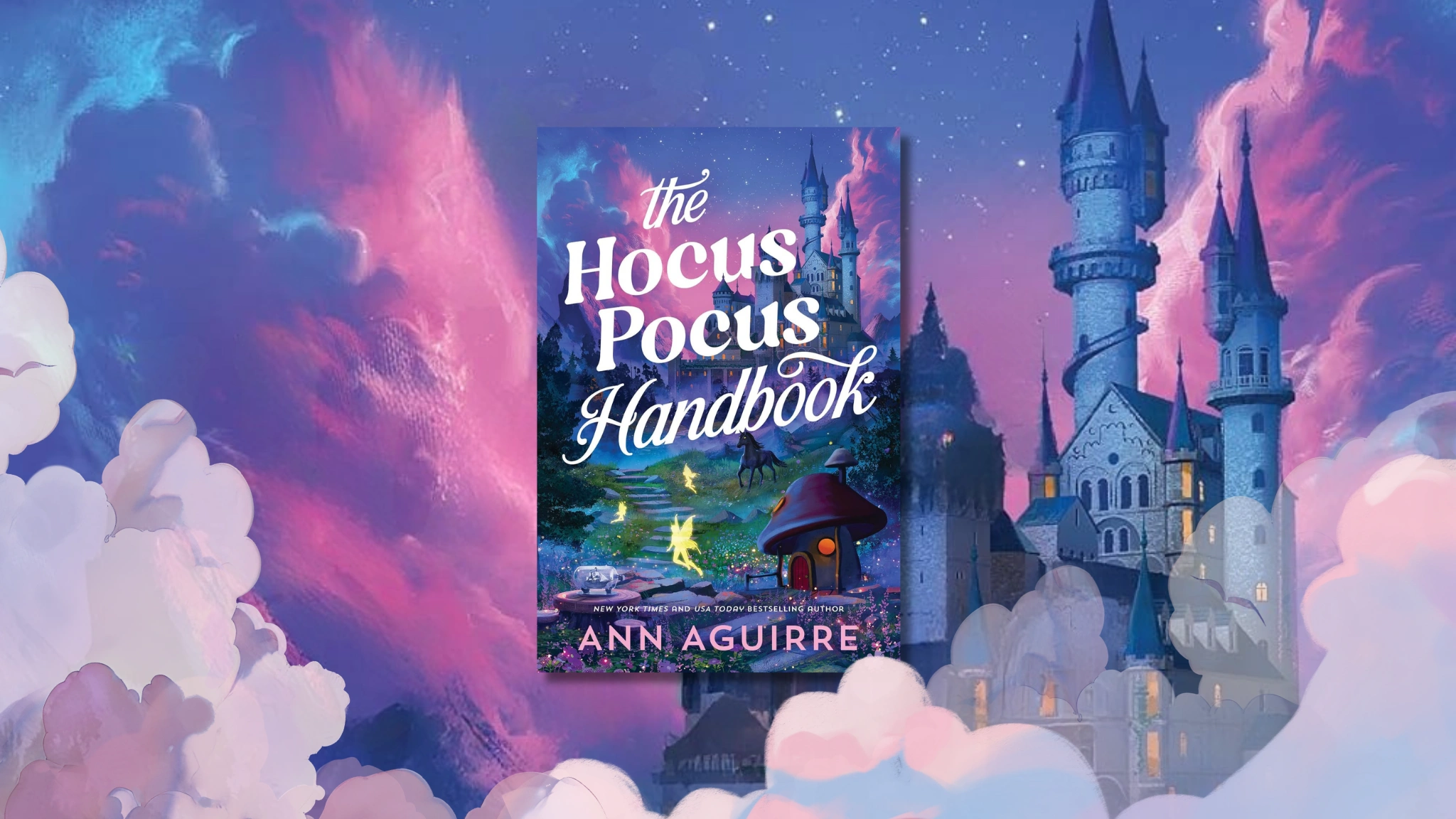
When I sold my first novel to a traditional publisher nearly 20 years ago, research was different. This reflection isn’t about the good old days, however. I won’t discuss the reasons why it’s more difficult to source accurate information online; I will only state that it is more difficult. Which left me with an interesting dilemma as I set about drafting my new cozy fae fantasy novel, The Hocus Pocus Handbook.
I already knew that I wanted to do a nontraditional framework and shape it like a spellbook written especially by a doting father for his beloved adoptive daughter. See, my protagonist Thea isn’t native to faery. In some ways, hers is an immigration story. Despite not being from there, she loves the wilds and the wild fae with a devotion that I find incredibly moving, but it also means she feels like she doesn’t fit in. She can’t use fae magically easily, naturally, innately, as do those who were born in the fey realm. Thea’s dad, Mudge, wants to help with that, and thus, my idea for the spells that frame each chapter was born.
Given how online research is driven by AI, which is known for errors and inaccuracies, I chose to order physical copies of multiple nonfiction titles written by practicing witches. I studied how they shaped their spells and what types of components they used. I paid attention to the elements being invoked. Practically speaking (and who doesn’t love Practical Magical?), this doubled my writing time because I would spend a whole day carefully crafting the spell ostensibly written by Mudge for Thea’s use. The spell itself needed to be internally consistent with the source materials I was using, a spell that could actually be cast by a practitioner, provided they could source all the materials. Once I had the technical aspect down, I needed to add narrative value because the spells are also a love letter from Mudge to Thea. These spells do emotional labor as well as being efficacious magical workings. In fact, there’s another layer as well.
First, the spells need to work. Someone can cast them in the real world (though I can’t guarantee any particular results). Second, they need to give insight or deepen the relationship between Mudge and Thea. Third, they also need to provide context and backstory for Thea, what her early life in faery was like without info dumping. With all of that balancing on the unique, original spells, I had to take my time and craft them with great care. Instead of writing a chapter in a day, each of Thea’s chapters thus needed multiple writing sessions.
How did that specifically change the drafting process, you ask? Well, it took me twice as long. Normally, I write five chapters a week when I’m drafting, but with The Hocus Pocus Handbook, since I started in Thea’s point of view in chapter one, on a Wednesday, I’m only on chapter two, and Friday? I’m finishing chapter three. And that’s presuming the spells cooperated and everything flowed. Sometimes it didn’t because it’s not easy to craft a story around a spell and then tie it to the larger plot. It was some of the most intricate writing I’ve ever done, craft-wise, and I’m so proud of this book. Early readers have mentioned that they love the unconditional, supportive affection Mudge offers Thea, and I’m beyond delighted by that, as it’s the sweetest father-daughter relationship I have ever devised.
People who are familiar with my work know that I write a lot of found family dynamics. Mudge is certainly that for Thea, as he has unofficially adopted her, but I would argue they are not simply found family. They’re family. Period. Because love doesn’t have limits.
I went old school with research and spell craft in The Hocus Pocus Handbook, and I couldn’t be happier with the results. Yes, it took longer, and I did wrestle with my own tendency toward perfectionism. But some things are worth the wait.