The Yonder by Donald Samson
Donald Samson opens The Yonder with Coleridge’s meditation on a dream so vivid its flower survives into waking life, and from that first page the book asks the same question of its reader: what would you risk to bring something real back from somewhere impossible?
The premise is deceptively simple. A well-to-do woman, cane in hand and grief in her chest, is led through the fog and gaslight of a Victorian-flavored city by a wretched, hunchbacked beggar named Iberon, toward a tavern-dweller known only as Mr. G — a man who deals in a currency no constable can offer: passage to the Yonder, the other-place her husband vanished into six months before. From this opening, the novel commits fully to its quest structure, sending its heroine across a threshold that can only be found on the darkest, moonless night of the month, guided by a gruff, animal-skinned tracker named Magpie and the enigmatic Mr. G himself.
What struck me first is how Samson handles atmosphere. The early chapters are a masterclass in slow-burn dread and wonder built through sensory detail such as the phlegmy cough of a beggar in an alley, the reek of rotted vegetables and urine giving way to the warm, dry hum of a hidden ale-room and a clock tower counting out the hour while a candle sputters in its own wax. This is a writer who understands that a portal fantasy lives or dies on the threshold itself, and the sequence in which the heroine crosses from her ordinary world into the unknown is absorbing. You feel the cold pinch of the alley on your own cheeks.
A Fable Dressed as an Adventure
The chapter titles alone are a pleasure to browse in the table of contents, and they promise exactly the kind of book this turns out to be: a fable dressed as an adventure. “More Beast than Man,” “Unspeakable Folly,” “Pigs in a Basket,” “Why it is Wrong to Eat the Duck,” “A Wolf in Wolf’s Clothing,” “A Snake in the Grass” — Samson is clearly working in the lineage of allegorical quest literature, where a talking animal or a moral dilemma is never just incidental color but part of the book’s larger argument about courage, temptation and what it costs to keep going when the way isn’t marked. It’s the kind of structure that rewards readers who love stories where every strange encounter seems to mean something.
Strange Companions on an Unmarked Road
The dialogue deserves praise. Mr. G is commanding, weary and withholding in a way that makes every one of his short, clipped answers feel loaded with backstory. Iberon, by contrast, is all wheedling music and pathos, a beggar-guide whose comic desperation for coin never quite erases the reader’s sympathy for him.
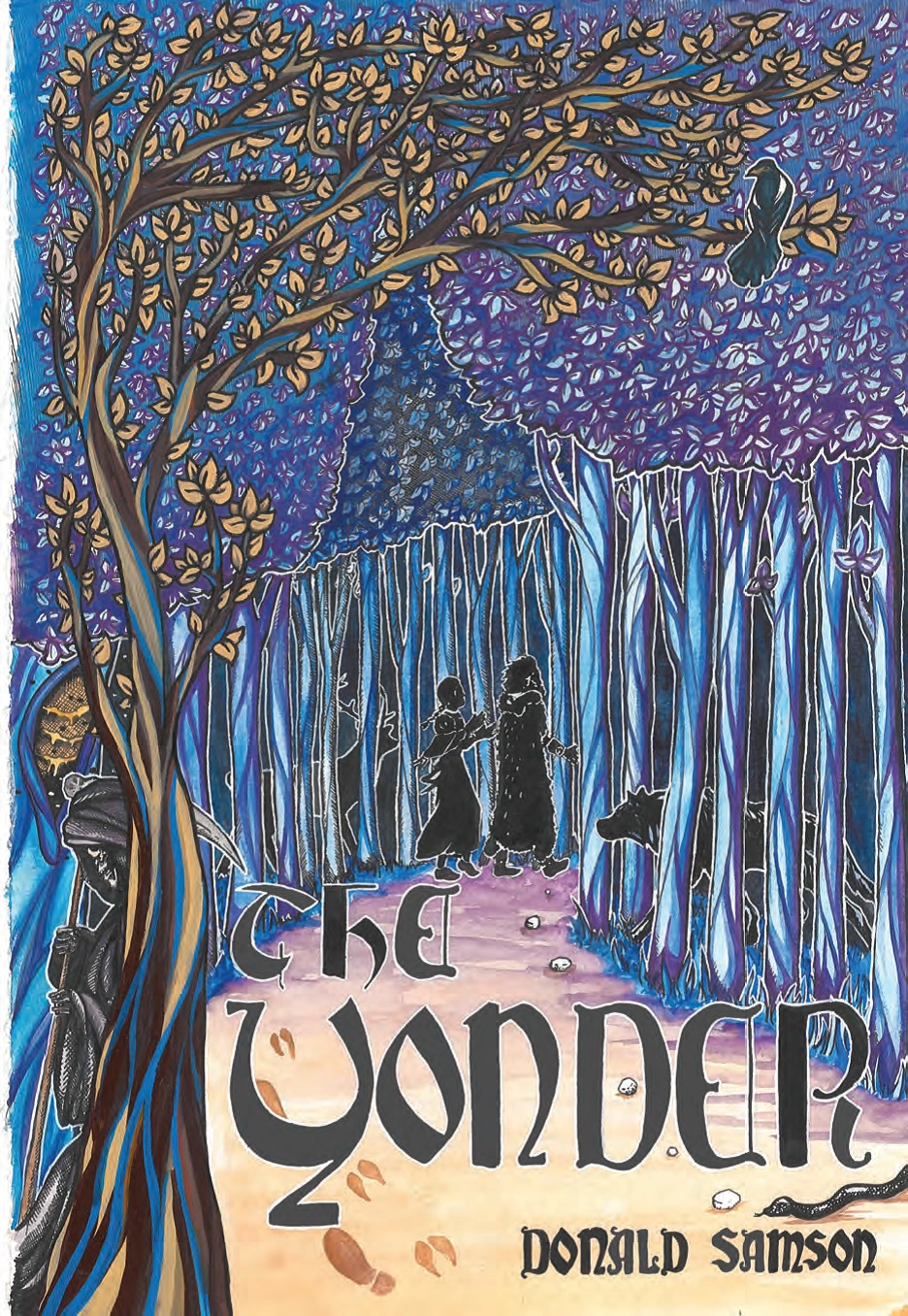
Heidi Nisbett’s illustrations are a lovely companion to the prose and the book’s overall design gives the whole thing the unhurried, handcrafted feel of a book meant to be read slowly, ideally aloud, the way the great Victorian-era quest fantasies were.
If you’re drawn to portal fantasies with the moral seriousness of a fairy tale and the emotional stakes of human grief, The Yonder is a rewarding place to spend your time. It has the patience of a novel that trusts its atmosphere to do real work, characters who are strange without being cartoonish and a structure that promises a journey. Readers who loved the fable-like texture of classic quest literature, or who simply want a story willing to ask what you’d risk for someone you love, will find The Yonder a satisfying place to disappear into for a while.
About Donald Samson:
 Donald Samson has been a Waldorf School educator for the past 37 years. He has worked with children in grades 1-12. He considers the ability to tell an engaging story the key to engaging children — or anyone, for that matter.