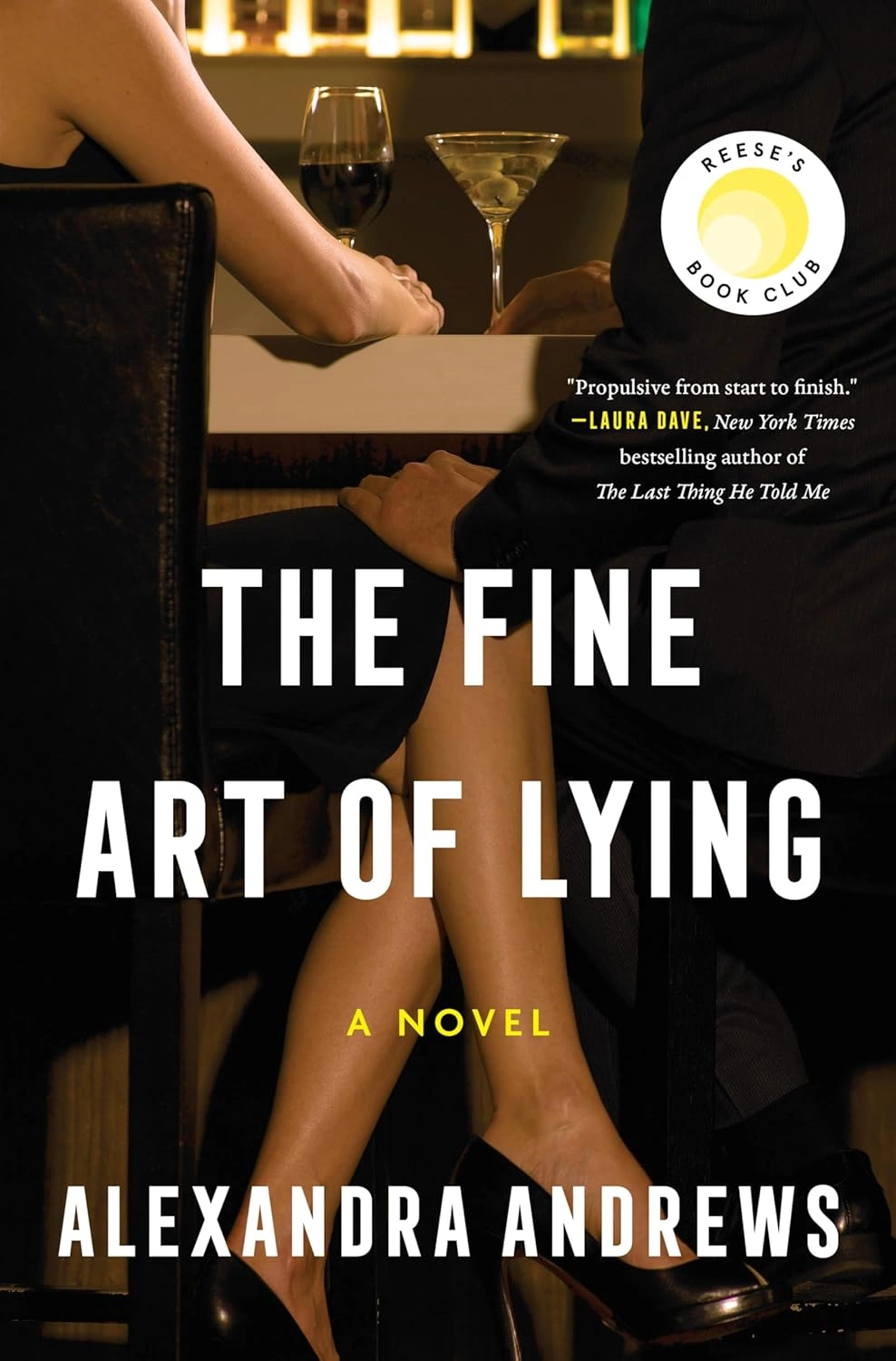
The Fine Art of Lying by Alexandra Andrews
Alexandra Andrews’ much-lauded 2021 debut novel Who is Maud Dixon, published in twenty-eight languages, continues to impress. Acid-honed superb writing and a surprising plot have justified the skyscraper-high expectations for her second novel, The Fine Art of Lying.
The two words “VENETIAN RED” spelled out in capital letters in the first paragraph of the brief prologue are enough to startle readers out of any complacency. Protagonist/narrator Clare Best stood dispassionately mentally analyzing paint pigments used by Renaissance painters and other artists, admiring the luminosity and texture of the shades of blood pooling from the body of her murdered lover. Stunned by the sudden violence, her knowledge of art history automatically kicked in as a coping mechanism before panic could strike. Logically, the next move would be to dial 911, report the crime, and wait for the police investigators to arrive. Instead, she gathered her belongings and went home to her husband Jed and their beloved young daughter Sophie in their elegant Park Avenue flat. But do not rashly incorrectly surmise: Clare was not the killer, and the novel is not macabre.
A Life Surrounded by Art and Privilege
Clare suffers from ennui and imposter syndrome and can barely tolerate being in the same space as her snobbish, detestable mother-in-law with her continual barrage of snide remarks spewed sotto voce. Born and raised by her divorced mother, Clare earned undergraduate and master’s degrees from her hometown, SUNY Binghamton. Although not personally artistically gifted, art was her overriding passion; it spoke to her, particularly the abstract expressionists and the Coenties Slip artists who lived and worked in lower Manhattan from about 1956 to 1967. Following graduation, she landed a low-paying job in the Development Department of The MET (Metropolitan Museum of Art), where Dorothy Bast is an active board member and high-end donor. A co-worker set Clare up on a blind date with mama’s boy Jed Bast, a lawyer in the firm where his father was managing partner. They began to live together during the pandemic, became engaged, and, despite Dorothy’s veiled insults and an inequitable prenuptial agreement, married. Clare began working on her doctorate at Columbia University and completed all courses but has been in “all but dissertation written” limbo since becoming a full-time mommy after the birth of Sadie.
The Bast family and friends, convinced she married for money, not love, continued to condescendingly patronize Clare. The trappings of wealth held little interest for her, with their attendant gossip and mindless chatter at endless luncheons, dinners and charity events. Their privileged world with its all too predictable rigid expectations seemed circumscribed and hollow. Toddler Sadie was enrolled in the same preschool as Jed, and his sister Lauren attended, leading Clare to fear her daughter could become a shallow clone-like pawn of her grandmother. Unanticipated changes occur when Jed accepts a job with a private equity firm offering a huge salary boost but encumbered with grueling, family-time-eroding, long hours. The firm’s owners Alec and Tasha Wolfe, godfathered by a Russian oligarch, are uber-wealthy high-fliers with an important art collection they delight in flaunting at parties. Clare begins to socialize with the lively and intelligent boss’s wife.
Secrets Behind the Canvas
Through Tasha, Clare met charismatic gallery owner Gabriel Prévost, an educated, highly intelligent Frenchman who possesses a knack for discovering wildly successful young artists. While he is handsome, the immediate allure for Clare is the meaningful conversation about their shared passion for art. Gabriel temporarily possesses an 18 million dollar painting reaccessioned by the MET that he has already resold, but until the monies transfer, it hangs in his apartment. When Claire accepts Gabriel’s invitation to view the painting, monumental and regrettable mistakes made in the heat of a moment lead to a short-lived but passionate affair.
Two months later, he is dead, the painting is stolen, and Clare becomes the primary suspect. With her world thus upended, she is forced to independently investigate what is revealed to be a shocking series of crimes that have been committed. The plot is deeply nuanced; many lies have been told, and even the circumstances of the MET sale of Longfin are murky. In a recent interview with The Nerd Daily creator Elise Dumpleton, Alexandra Andrews succinctly summed up The Fine Art of Lying in three words: “sex, art and murder.” Who could ask for anything more?
About Alexandra Andrews: