Your spouse survives the accident.
Everyone tells you how lucky you are.
They’re right.
But the person who comes home isn’t quite the person who left.
Their memory is fractured. Their personality has shifted. Conversations that once flowed effortlessly now require patience. They may not remember the moments that shaped your life together.
Suddenly, the future you imagined together is gone.
And you’re left with a question you never expected to ask.
How do I love the person standing in front of me now?
We often say we love someone for who they are.
But who is that, exactly?
Is it their face? Their personality? Their memories?
Or is it something deeper than all of those things?
As I’ve grown older, I’ve found myself thinking about that question more often.
My wife would probably tell you we’ve both gotten older.
She’s right.
She still laughs at the same terrible jokes.
I still love being the one who tells them.
It made me wonder whether love changes what we see—or simply teaches us to notice what mattered all along.
Most wedding vows include the words, “in sickness and in health.” They’re easy to say when you’re young. It’s only later that you realize what those words might ask of you.
Sometimes life changes people in ways we never imagined.
Sometimes gradually.
Sometimes all at once through a traumatic brain injury, a spinal cord injury, the loss of a limb, or Alzheimer’s disease.
I’ve watched couples finish each other’s sentences after forty years.
I’ve watched others learn to introduce themselves again after memory disappeared.
I’ve come to believe that the easy years don’t define love.
It’s revealed by the hard ones.
Love asks us to adapt without losing sight of the person who’s still there. Sometimes it also asks us to grieve what was lost while loving what remains.
I’ve often wondered what happens to love when the life you built together disappears.
Not all at once.
Sometimes it’s one memory.
Then one ability.
Then another piece of the life you built together.
Many people discover something they never expected.
They discover that the person they love is still there.
Not because suffering is beautiful. It isn’t.
Not because hardship should be celebrated.
But because they stop loving the life they once had and begin loving the person who is still there.
Given enough time, every marriage changes.
Bodies age. Memories fade. Illness and loss eventually visit us all.
None of us stays exactly the same.
If love depends on things that time can take away, then time eventually wins.
Real love looks past what’s been lost to find the person who’s still there.
It becomes less about what someone can give us and more about our willingness to keep choosing them.
Maybe that’s what marriage has always meant.
Not promising that life will never change the person beside you.
Promising that you’ll still be there when it does.
Not every relationship survives tragedy.
Every family carries burdens that outsiders can’t fully understand.
No simple essay can explain them all.
This question stayed with me for years.
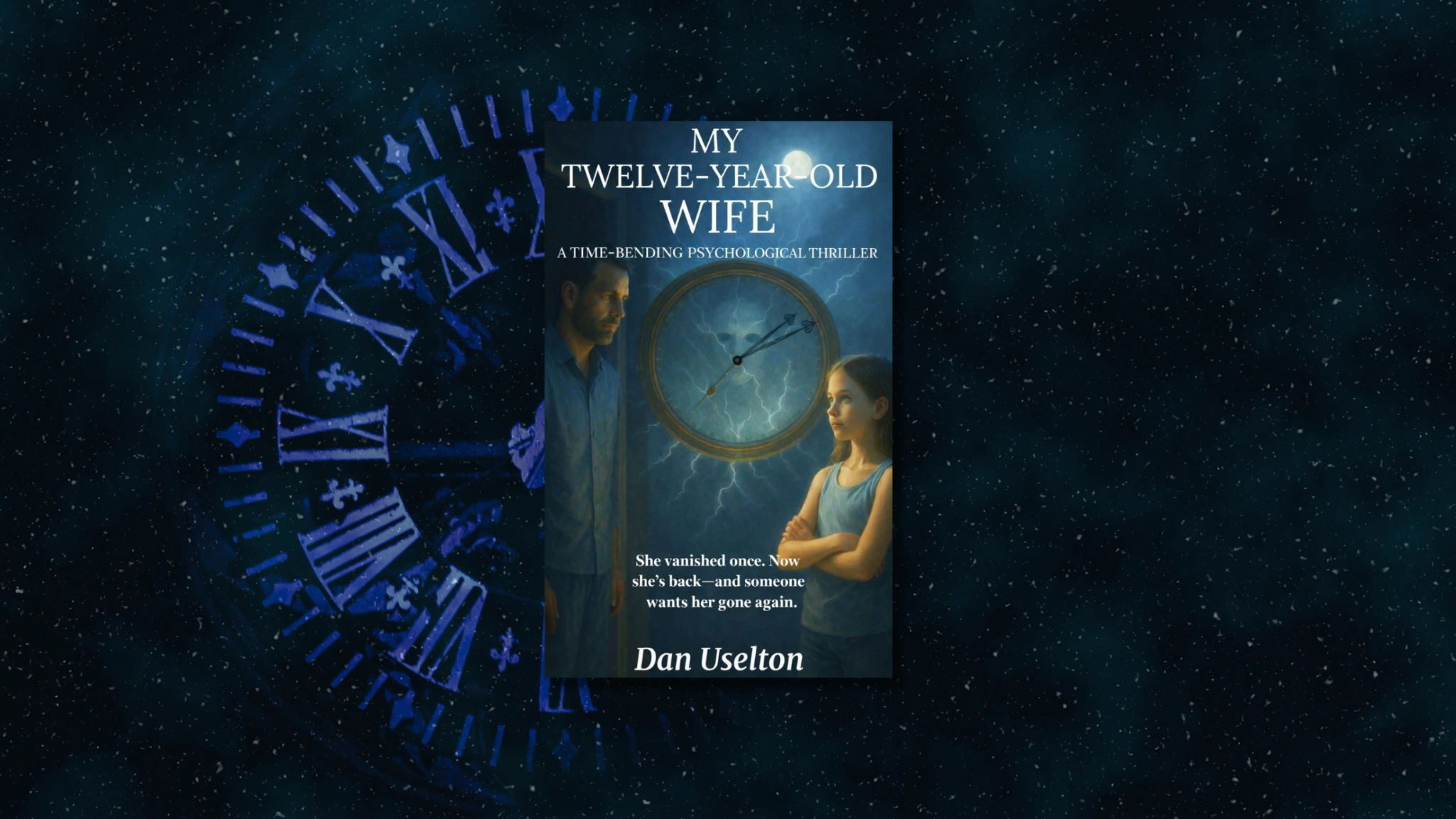
Eventually I realized I couldn’t fully answer that question in an essay. It became the foundation for my psychological thriller, My Twelve-Year-Old Wife.
Writing that story changed how I think about love.
I no longer believe love is measured by how we feel when someone is at their best.
I think it’s revealed by how we love someone at their most vulnerable.
The story imagines an impossible situation, but the question beneath it is real.
When everything about someone changes…
Who is it we’re still loving?
Maybe love was never about holding on to who someone was.
Maybe love is seeing the person who’s still there—
and choosing them anyway.