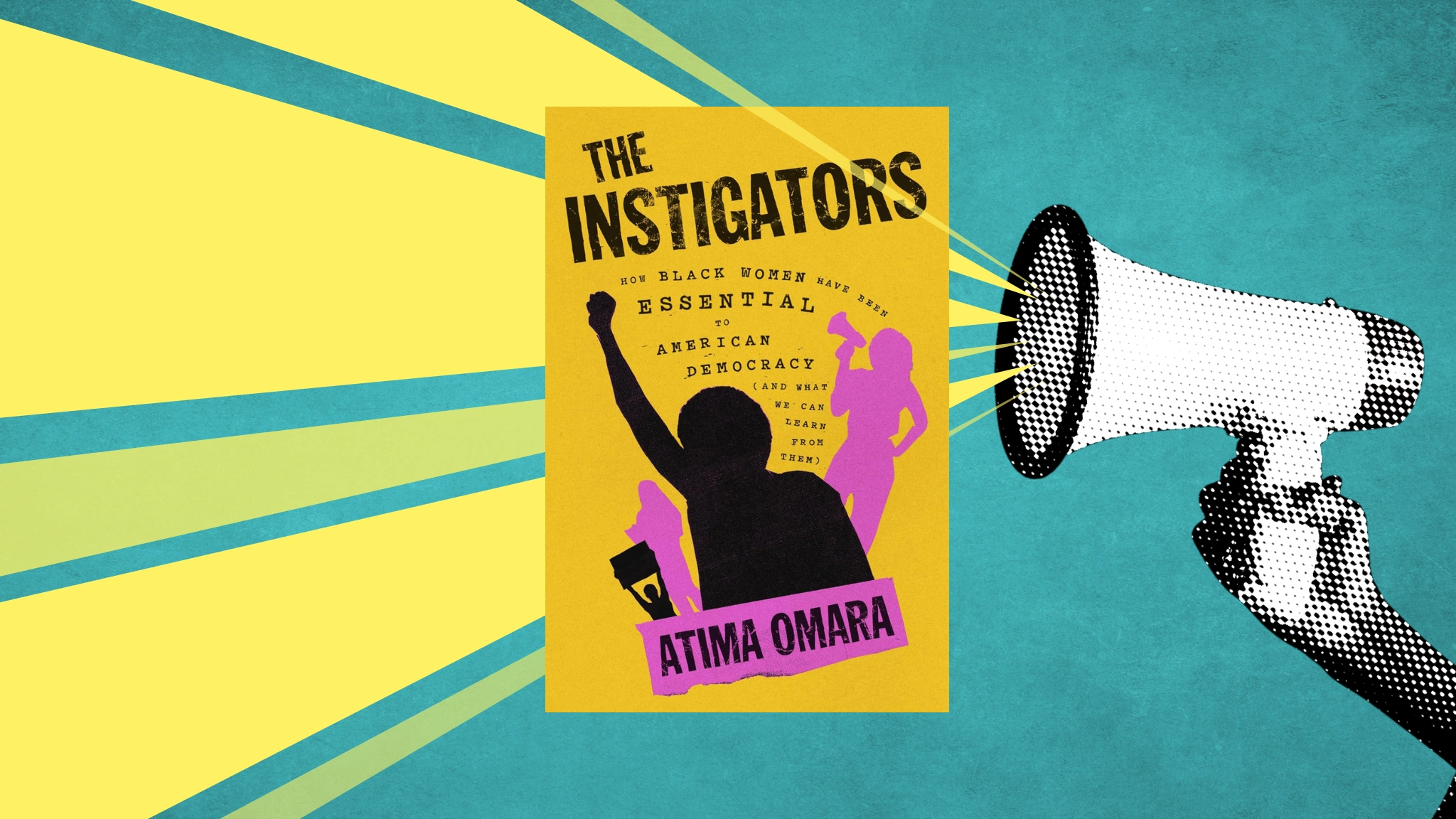
As people look for guidance and strategy while democracy is eroding, look no further than the Black women political organizers, journalists, movement leaders and elected officials I feature in my book, whom I call “The Instigators.”
Oftentimes much is said about the ability of women to change the world, so if you elect a woman in the United States, at least their community will benefit. What I have found to be true from my two decades of experience in political and movement work is that those who this applies to the most and can be found at the vanguard of any political and social movement for progress in the United States are Black women, particularly the key demographic of Black women. I write about the Instigators (age 18-45). From generation to generation, these Instigators exist, and it’s not because Black women are inherently magic — as one slogan created to buoy the spirits of Black women says; the answer is much more simple than that. In a nation where they have been intentionally abused, left unprotected, marginalized and exploited, as Black people and women, they are pushed forward by these indignities and injustices to act on their behalf and that of their community for survival.
These instigators, some known to history, others less so (by design), fought for the abolition of slavery and against the forces of Jim Crow that prevented voting rights and equal opportunity for them. They organized for better wages and treatment for their labor or better schools, clean water, and air for themselves, families and the community. When pushed out, they built institutions as workarounds to support and empower their communities. They wrote and spoke words to inform and motivate the masses. And in fighting these fights, their work established a just and more free society from which everyone benefited in the United States, even those people who would rather Black women have no rights at all. All of this when they likely would have preferred living their lives unrestricted from the weight of what systemic discrimination wrought.
What might they have become otherwise had injustice not driven them to act? We’ll never know in most cases, but what I have ascertained from my own work and in the researching and writing of this book is that they were essential in building a multiracial democracy in the United States. A democracy where many today, regardless of race, gender, socioeconomic status, ability, sexual orientation or gender identity, have more chances to live and thrive in ways those who came before them had not.
In this book, I tie together the Black women of history to the Instigators doing the work in their communities today. The modern Instigators have continued the fight, often dismissed and continuously underfunded, to try and maintain the multiracial democracy their spiritual ancestors built.
As we see the continued rollback of policy and political gains for a multiracial democracy, such as the Supreme Court finally gutting the last section of the 1965 Voting Rights Act. There are lessons to be learned from these Instigators and their work that can guide EVERYONE in fighting the crumbling of democratic norms and institutions and building a truly inclusive multiracial democracy. Listening to Black women and learning the lessons of their lives is not just a cute slogan but a moral imperative in strategy, organizing, elections and funding for the work ahead.