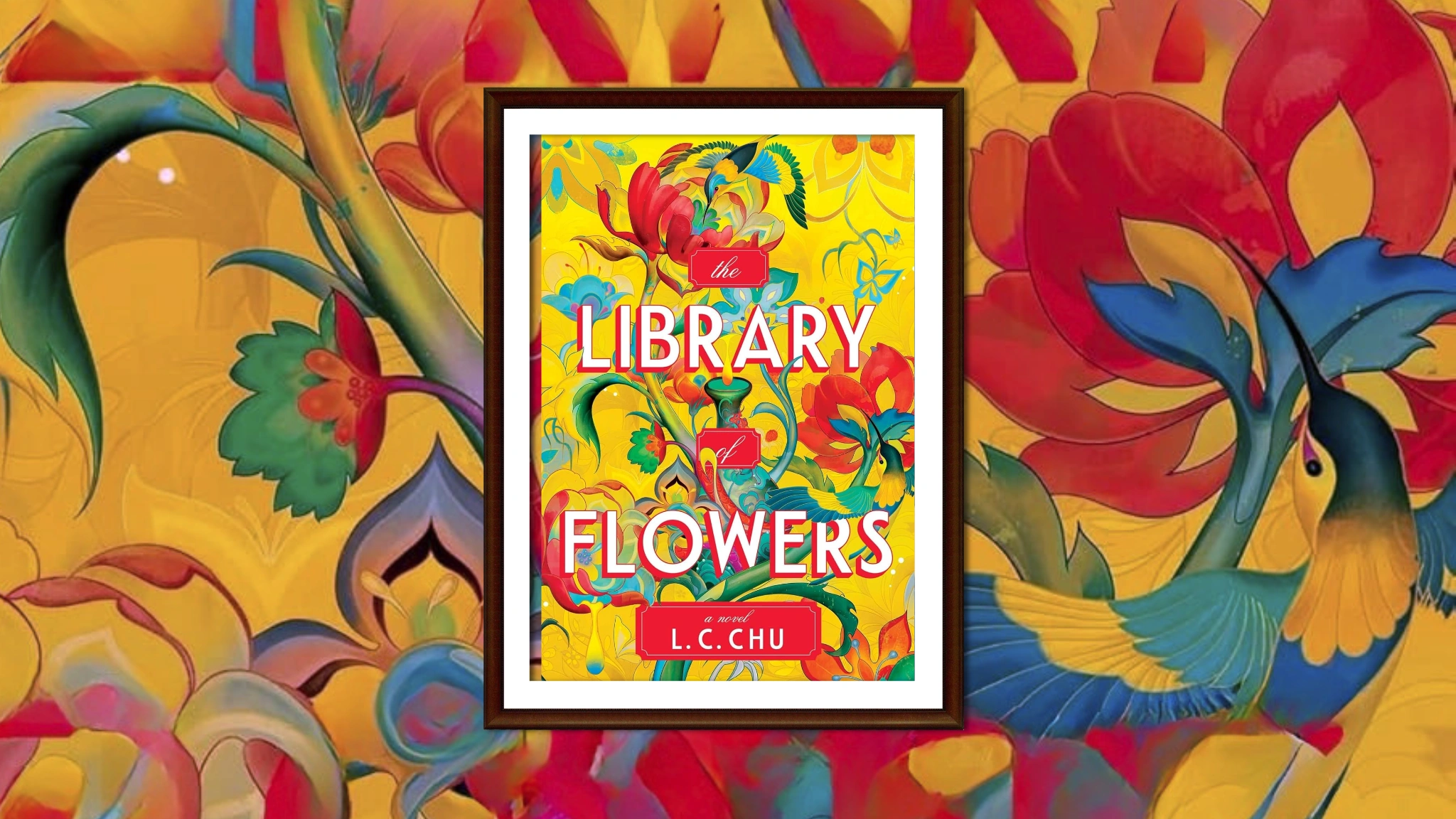
Lucy Hua comes from a long line of Chinese perfumers gifted with the secret power to sway emotion with their perfumes. In every fifth generation, an eldest daughter is born with the rarest gift of all: the ability to summon true love. However, when Lucy, the long-awaited fifth daughter, fails, she flees her exacting mother and her family in Vancouver. The possible reappearance of her power brings Lucy more problems…and the potential to gain what she’s lost.
As someone with a poor memory and overactive imagination, there’s a special kind of satisfaction to being able to track an idea’s inception to a single, concrete moment. For The Library of Flowers, it was a hot summer afternoon in August 2015. I was in Paris on vacation (fancy!) and was on the phone, talking to my agent about perfume. I’d spent part of the day nosing my way around spritzes of bergamot, iris and sandalwood in French boutiques that I was tragically underdressed to shop in.
“You should write a book about a perfumer,” she said. “It would be fun.” It did sound fun, so I wrote a historical romance about an alchemist perfumer who worked for Anne Boleyn. It never left my laptop. Somehow, it simply didn’t feel right.
It wasn’t until several years later that the idea resurfaced during another conversation with my agent. I usually write romance, but I wanted to tell a story that revolved more about family and identity, and this time with a touch of magic.
“You should write it as that perfume book,” she said. “It would be fun.”
Again, it did sound fun, so I went away and wrote the first three chapters of what would eventually become The Library of Flowers. This time, I had a better idea of what I wanted. It was going to be set in the contemporary period, although I indulged in my love of Chinese history by adding in perspectives from Lucy’s ancestors from the Tang, Ming and Qing dynasties. Obviously, it would involve perfume, so I took perfumery classes, bought a kit to make my own, and spent days in the library to understand the trajectory of perfumery in China. Most importantly, I thought hard about how to center the topics I also discussed in my romance books — identity, belonging and family.
Lucy is a woman who has isolated herself and is suffering from the consequences of her own decisions. She wants love and friendship, but refuses to be vulnerable. She wants her family, but can’t find it within herself to give her mother grace. She wants home, yet keeps running. And she desperately wants to know why she is the only Hua who can’t summon their old ancestral magic.
As I wrote, it became clear I’d chosen well. Perfume was the perfect vehicle to carry such questions. Like emotion, scent’s power can be fleeting and influenced by memory. Lucy’s desire for home and love trail her no matter where she goes, like the spillage of a potent fragrance.
Maceration is the term perfumers use to refer to the time a fragrance is left to sit and allow the notes to blend, resulting in an improved scent. Although Lucy’s story was over a decade in the making, I think it benefited from the time to mellow, grow and mature into the book it was meant to be.