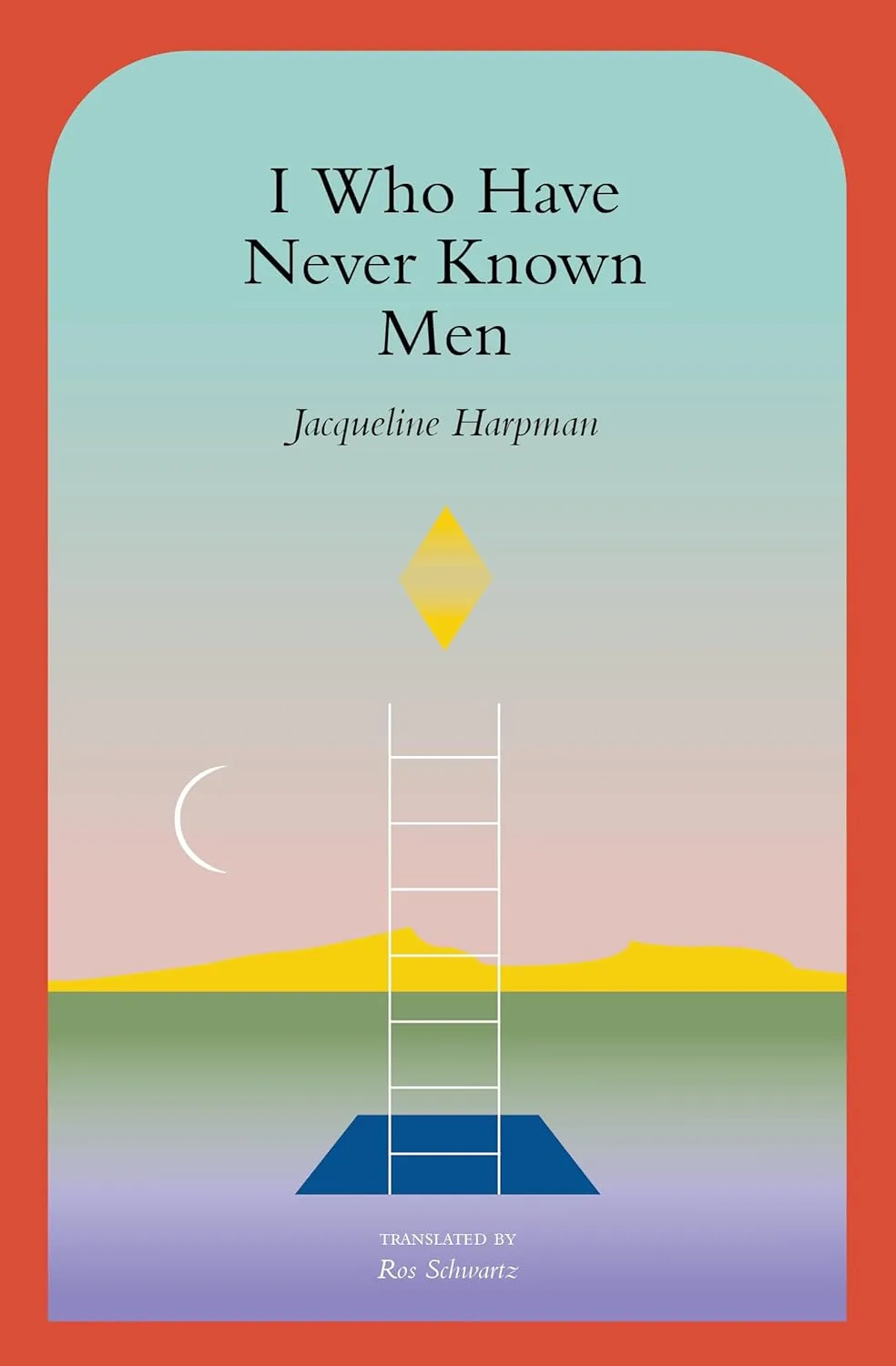
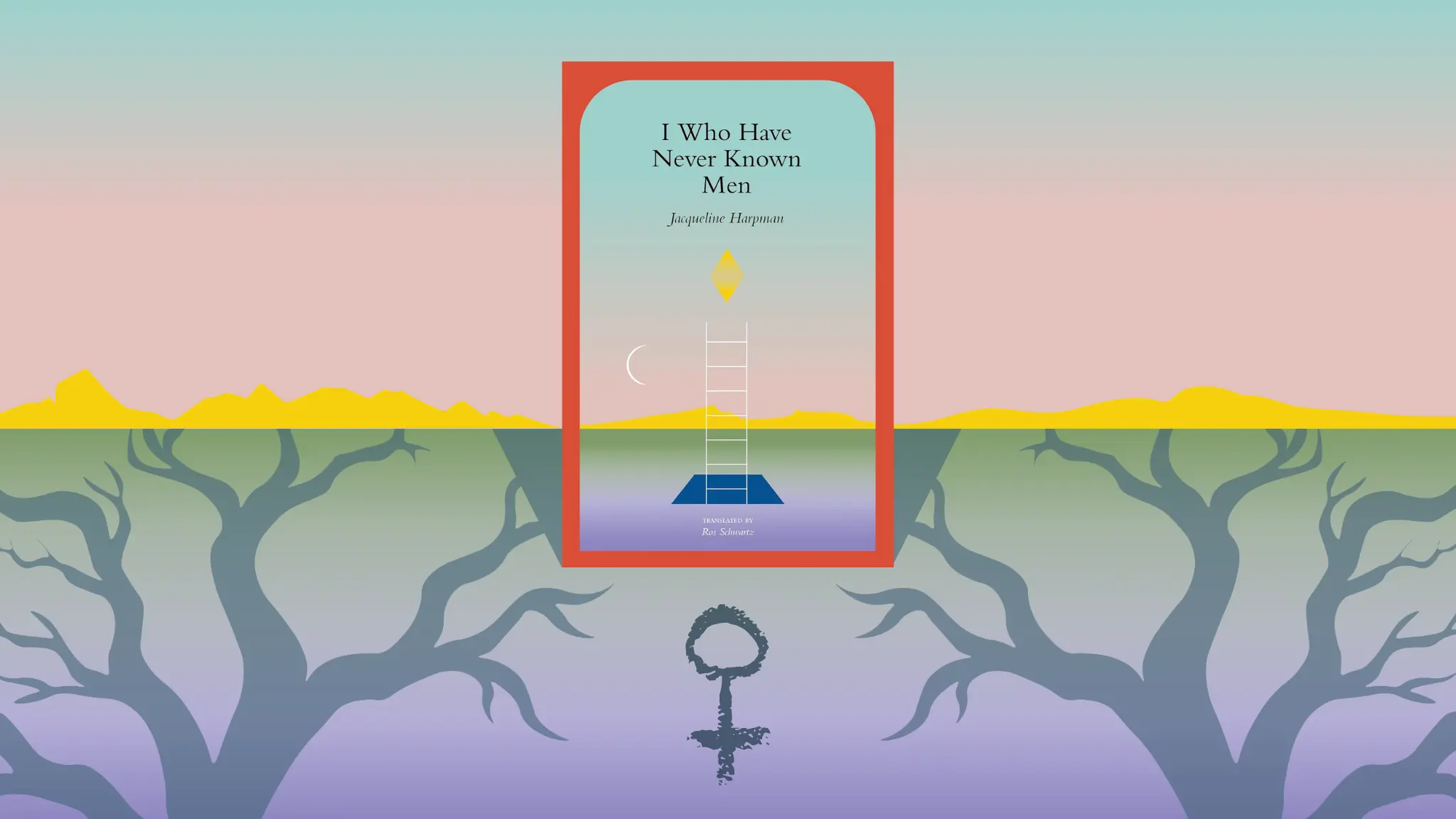
I Who Have Never Known Men by Jacqueline Harpman
What would a world without men be like? What would it be like to grow up without ever knowing a man at all?
Jacqueline Harpman’s novel I Who Have Never Known Men offers few concrete answers in response to the questions it poses — of which there are many. The story features no main antagonist or outright problems, and the main character seems to go on a repetitive journey leading nowhere. Though at first it disguises itself as an unrelentingly bleak work of dystopian sci-fi, readers will soon realize that, behind it, is a contemplative and truly hopeful philosophical thought piece on power, culture and isolation. It is not difficult to discern why, though originally published in French in 1995, the novel has had a recent resurgence in popularity among English readers.
The story follows a girl, caged inside a bunker with 39 women, all considerably older than her, for reasons unknown to any of them. Male guards, carrying whips, patrol in groups of three, but never speak to or touch the women. None of the women has any recollection of the events that put them in such a position, though they do have memories of their “normal” lives before. The protagonist has no memories of before — only of the cage.
One day, due to a stroke of luck, the guards flee, abandoning their post, just as the door is unlocked. The women ascend from the cage that was once their entire world to claim their freedom, only to find the planet outside as dismal and desolate as life below. The world is barren and nondescript enough to give the women reason to question whether they should remain on Earth. Nevertheless, they work together to build a life for themselves and establish a community, while continuing their fruitless search for other life.
A Dystopian Story That Tackles Tough Questions
Their journey unfolds through the eyes of the girl, only ever referred to as “The Child,” as she explores the newly discovered world and human nature itself. The protagonist is clearly unlike the others, growing up without the influence of men or culture whatsoever, and because of those differences, she questions her own humanity so deeply and frequently that even the reader begins to doubt.
“How much of our humanity is intrinsic?” she asks, “How much remains, when all else is stripped away?” She yearns to understand why the other women mourn for the loss of men but cannot comprehend it herself. Ultimately, however, she proves her humanity through her thirst for knowledge, formation of deep and loving connections, and her unrelenting hope.
In writing her story down for posterity, The Child reveals her overall assumption that there is still human life out there somewhere, despite her unawareness of it. Like Sisyphus pushing the boulder up the hill each day only for it to fall back down, The Child decides to live her life boldly in spite of the apparent lack of meaning — continuing to search for life even when it appears fruitless.
Harpman’s prose is easily digestible but poignant. I would recommend this relatable and resonant novel to readers with an endless thirst for knowledge, readers unbothered by the open-ended, and readers on the endless search for life’s unintelligible meaning. Perhaps some questions are meant to be unanswered. Maybe the asking, the discussing and the attempting to figure it out are more impactful than the answer itself.
About Jacqueline Harpman
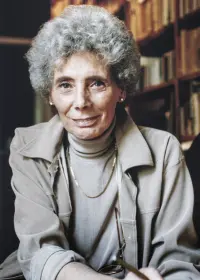 Jacqueline Harpman (1929-2012) was a Belgian author of over fifteen novels. Born in Etterbeek, Belgium, in 1929, she fled to Casablanca with her family during the Second World War. She studied French literature and trained to become a doctor, but was unable to continue her medical studies after contracting tuberculosis. Harpman began writing in 1954 and went on to write over 15 novels, winning numerous prizes, including the Prix Médicis (Orlanda), the Prix Victor-Rossel (Brève Arcadie), among others. I Who Have Never Known Men, originally published in French in 1995, was the first of her books to be translated into English.