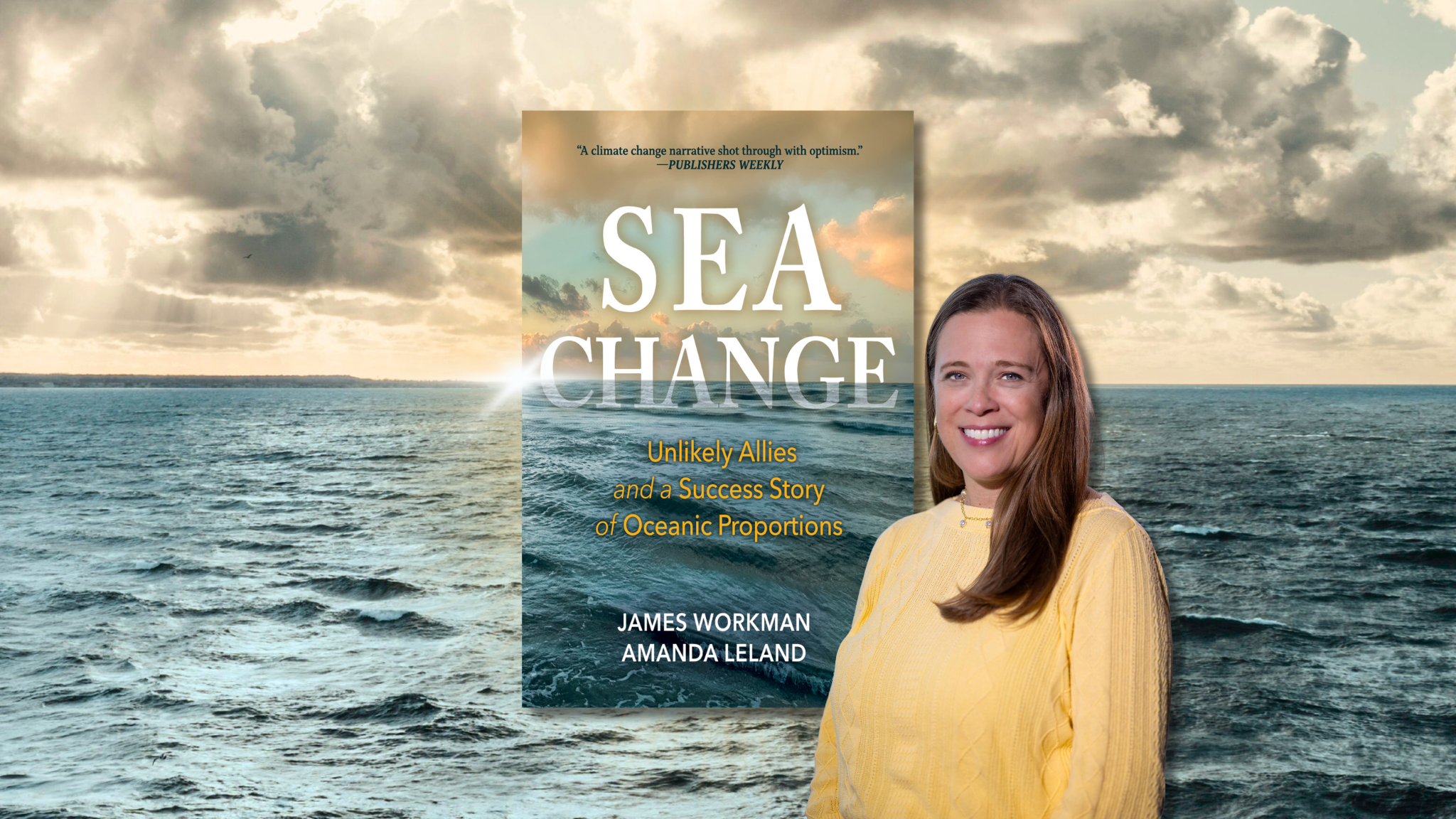
At first glance, Sea Change seems like a story about fish, numbers, quotas, and dwindling stocks. But the deeper you go, the more it becomes a story about people. A story about cultures that shape them, the community that holds them together, and the unexpected ways those forces can either erode an ecosystem or revive one.
In this Q&A, author Amanda Leland unpacks the very human mechanisms behind environmental decline and the hope embedded in solutions that center on cooperation instead of conflict. BookTrib spoke with the author about the psychology beneath policy, the power of unlikely alliances, and why the “sea changes” that matter most aren’t just ecological—they’re cultural, communal, and profoundly personal.
- The book frames overfishing as a deeply human problem driven by incentives, not just biology. What compelled you to explore that intersection between human behavior and environmental decline?
Humans and nature are inextricably linked, and human behavior is often the root cause of environmental decline. Incentive structures, whether economic, social, or otherwise, have a profound influence on that human-nature relationship. Science helps us quantify and characterize the problem; economics helps us design solutions that will align human behavior and a healthier ecosystem. We need both.
2. The book details how Buddy initially resisted the catch-share system that ultimately saved his fishery. What do you think his story reveals about the emotional and cultural barriers to adopting new conservation methods?
The people with the most at stake are often the most resistant, but the story also shows that they are the people with the most influence to chart a new course. Buddy was the biggest opponent, but he’s a smart and practical guy, and when he could see how his profits were increasing, he became a champion. Keep in mind, he was focused on the very real challenges of earning money to feed his growing family. He also relished being the best in the business at what he did: fishing. He is certainly still that. But the competitive nature has shifted to cooperation.
3. You demonstrate how fishermen, scientists, regulators, and environmentalists found unexpected overlap in their goals. What were the biggest surprises you encountered when documenting these partnerships?
Community building and strength. The story talks about how people who didn’t agree finally came together around the shared goal for more fish in the ocean, and that catch share management was the practical path to achieving that. But what no one really contemplated was how this shift would fundamentally build the community of Galveston, Texas, as well as the relationships of fishermen around the country who live and fish in different places but now present a unified voice for ocean science and conservation. Lasting friendships have been built in an otherwise very isolated business. There is real power in that.
4. The book suggests that lessons from catch shares could ripple far beyond the ocean—into forests, water, agriculture, even carbon markets. Where do you see the greatest potential for cross-application?
I really do see the potential everywhere, and thankfully, it’s happening. There has been incredible progress protecting the Amazon rainforest from destruction thanks to unlikely allies like Indigenous Peoples, food companies, and farmers working together. This involves recognizing and legitimizing the Indigenous Peoples who are best positioned to ensure conservation is effective. Similarly, for climate change, when communities directly benefit from clean energy and infrastructure buildout, it’s much more likely to happen. I could go on…
5. Throughout the book, you return to the concept of transformation—the “sea change” within communities and individuals. What does that phrase mean to you personally after writing this book? It means unstoppable progress. The story of the book is specific to a place and time. But that story could be retold in dozens, maybe even hundreds, of other books now. The beacon of hope sent out by Galveston, Texas, is shining around the world. That’s pretty awesome.
6. If readers were to remember one idea from the book about how humans can repair the damage we’ve done to natural systems, what would you want it to be? The solutions that last are the ones that improve people’s lives today. The key is to align incentives to reward human behavior for better environmental outcomes.
Also, if we sit down with people we disagree with, and really listen to them, we can almost always find common ground and work on a path forward that benefits people and our planet, today and for the future. In a polarized world, we lose the ability to listen and appreciate the nuance. We need to do more of both.
For more information about Sea Change
About Amanda Leland:
 Amanda Leland fell in love with the sea at five years old, when her grandfather taught her to fish. She has since gone on to get her Master’s Degree in Marine Biology, work as a marine mammal zookeeper, take more than 1,000 scuba dives, and kayak every chance she gets. As Executive Director of Environmental Defense Fund, Amanda brings unlikely allies together to find the ways that work to support healthy communities and economies while reducing climate impacts. She previously led EDF’s Oceans program, a global team in 14 countries focused on reversing overfishing while supporting thriving fishing communities, triggering the dramatic economic and ecological recovery of U.S. fisheries and beyond. She is the author along with James Workman of Sea Change Unlikely Allies and a Success Story of Oceanic Proportions