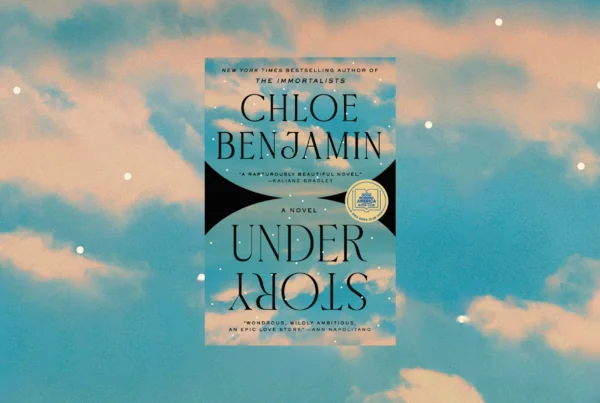
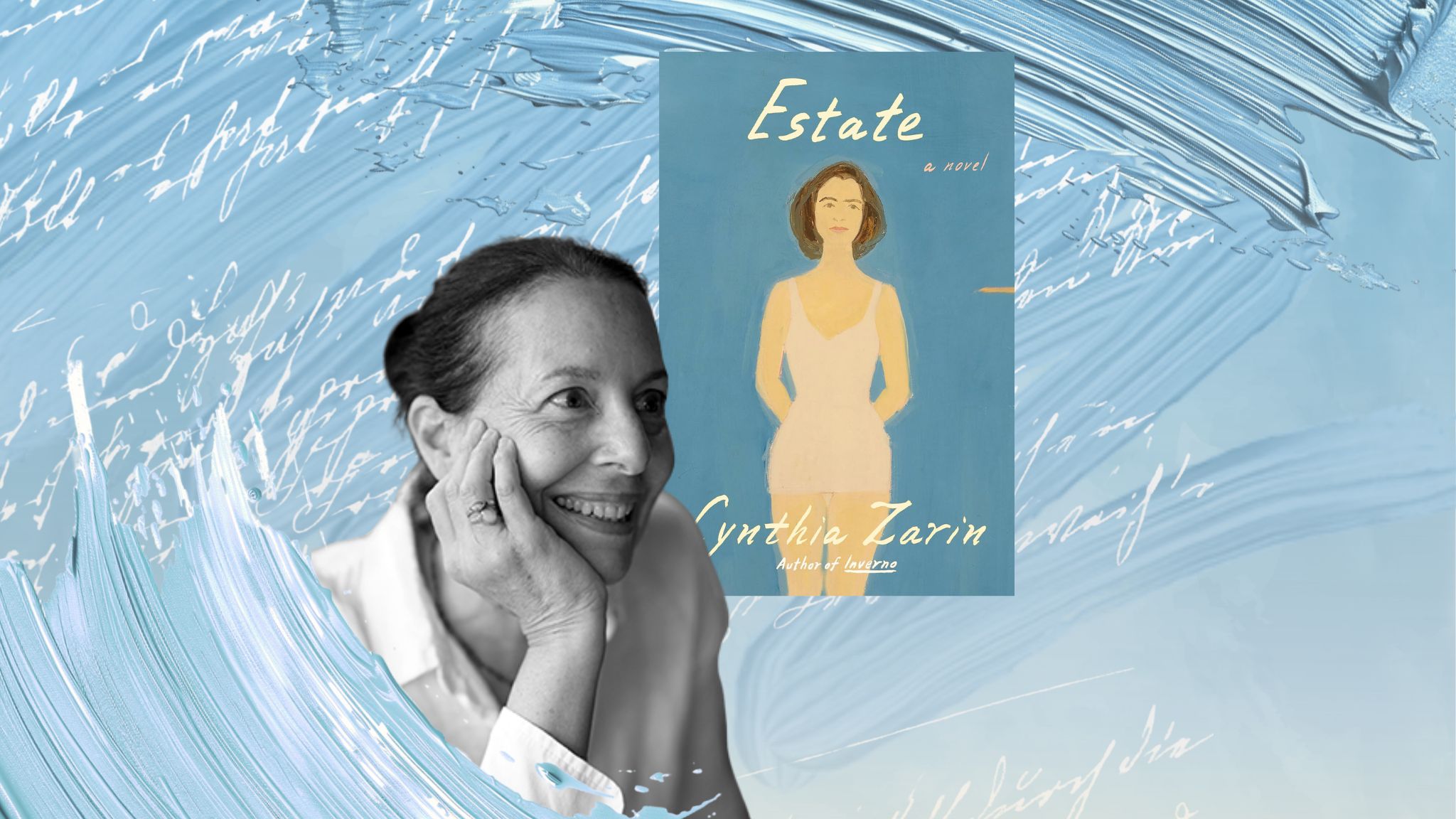
 In her mesmerizing new novel Estate, poet and essayist Cynthia Zarin returns to the interior landscape she began charting in Inverno. Where Inverno was wintry and suspended in time, Estate unfolds like the heat of summer — a mirror image that captures the feverishness of love and the difficulty of seeing oneself clearly within it.
The story centers on Caroline, a woman separated from her husband and entangled with a man who belongs to others, a relationship that opens into meditations on memory, myth and the stories we tell to make sense of desire.
Zarin, long celebrated for her precision as a poet and her luminous essays, brings that same lyrical intelligence to fiction. Estate blurs the boundaries between letter and confession, art and life, as Caroline writes to her lover, to herself and perhaps to no one at all. The result is an intricate exploration of intimacy, by turns tender, self-questioning and defiant.
We had the pleasure of speaking with Cynthia Zarin about Estate, its connections to Inverno, and the ways poetry, teaching and storytelling continue to inform her work.
Estate has been called a “summer counterpart” to Inverno. How do you see the two novels speaking to or mirroring each other?
The two novels are meant to stand independently of one another, but they are, as you say, a mirror.
In Inverno, Caroline is standing in the snow in Central Park, in a kind of snow globe, for most of the novel, recounting her long association with Alastair, and that story is interwoven with fairy tales and other narratives; Estate, which is in the first person — Caroline, speaking — takes place in the same temporality in which the story of Caroline and Alastair is recounted in Inverno, but the time sequence is from April to August in one year, and it is the story of her relationship with the interlocutor, here named as Lorenzo, to whom she told those stories in Inverno.
Estate feels both intimate and elusive — a voice speaking out of solitude. How did you find Caroline’s voice, and did she ever surprise you?
I think both books have the quality of someone who is speaking aloud, as a way of sorting out a story. I find Caroline perpetually surprising!
One of the most interesting pair of letters I received about Inverno, from two old friends in the same day, was “It is so interesting to be inside the head of someone who thinks just as I do!” and the other was, “It’s so interesting to follow someone’s thoughts when they are entirely different than mine!”
The novel moves between letters, memories and myths, blurring truth and invention. How do you think about storytelling itself — as an art, and as a kind of self-deception?
I think we blur truth and invention all the time. I was just at a seminar at the Yale Center for British Art, in which the subject was the invention of history! The topic under discussion (which grew out of the Hew Locke exhibition, “Passages,” which examines the legacies of Colonialism) was British Naval history, but it really could be anything we try, at some distance, to reconstruct.
You’ve written in so many forms, including children’s books. What does the novel let you do that other forms don’t?
The novel allows for a different kind of room. I tend to think about different genres spatially: what size is a stanza, or a paragraph? What do these forms allow? How do they take up space? What is the quality or atmosphere of that space? Who inhabits it?
Both Inverno and Estate are short novels — the word count is almost exact, as I did want them to be mirror images of each other. But they are longer than a poem or an essay, and there is more room for digression: the novel provides room for a longer arc.
The language in Estate has the rhythm of poetry. How does being a poet influence how you write fiction?
All writing is about paying attention. From the time I began writing poems, as a child, I’ve been dedicated to revision: draft after draft after draft, until you get it nearly right: it’s never exactly right!
And I think that almost bull-headed attention to each word, each comma, each line break, is the same attention I bring to writing fiction, word by word and sentence by sentence. Every sentence in Estate has been revised, and then tinkered with, many times.
You’ve written poetry, essays, journalism and fiction. What connects all your work across these different forms?
I think I’ve always been preoccupied with the conundrum of connection and loss. How does one lead to the other, and vice versa? In all my work, across genres, I try to figure out, once I read what I’ve written, where that thought might lead, and then think some more.
You’ve spent years teaching at Yale and mentoring other writers. How has teaching shaped your own creative process?
First of all, it’s tremendously exciting to be alongside student writers as they make their own discoveries: from writers they admire to how they, too, can be part of what I often call the dream of literature.
I think teaching keeps me on my toes! And it means that every week I am reading poems and essays — I don’t teach fiction — and trying to facilitate connections between students and the page, as readers and as writers.
Estate feels both personal and formally bold. What part of writing it was most challenging — or most freeing?
I think the most freeing was the space to invent, to pick up a theme and follow it, to answer questions as they occurred: in Inverno, why is Caroline standing in the snow?; in Estate, why do Lorenzo and Caroline tell each other so many stories? In Estate, I became very interested in the idea of mazes and labyrinths and the history of communication theory, which necessitated a tutorial about Euler and, later, Bell Labs!
Can you share what you’re working on now, or what readers might look forward to seeing from you next?
A few projects: I’ve written a libretto for an opera based on a picture book by John Burningham, called “Hey Get Off Our Train,” which is an early book (1989) about climate change and climate migration, and it will be performed in December in New Haven; I’m editing a selection of Marianne Moore’s essays. A chapter book for younger readers, Ado, will be published in 2027. And I’m thinking about a new novel.