Everyone in the neighborhood was getting ready for the party.
Everyone knew somebody on the guest list …
This was the day the dead returned.
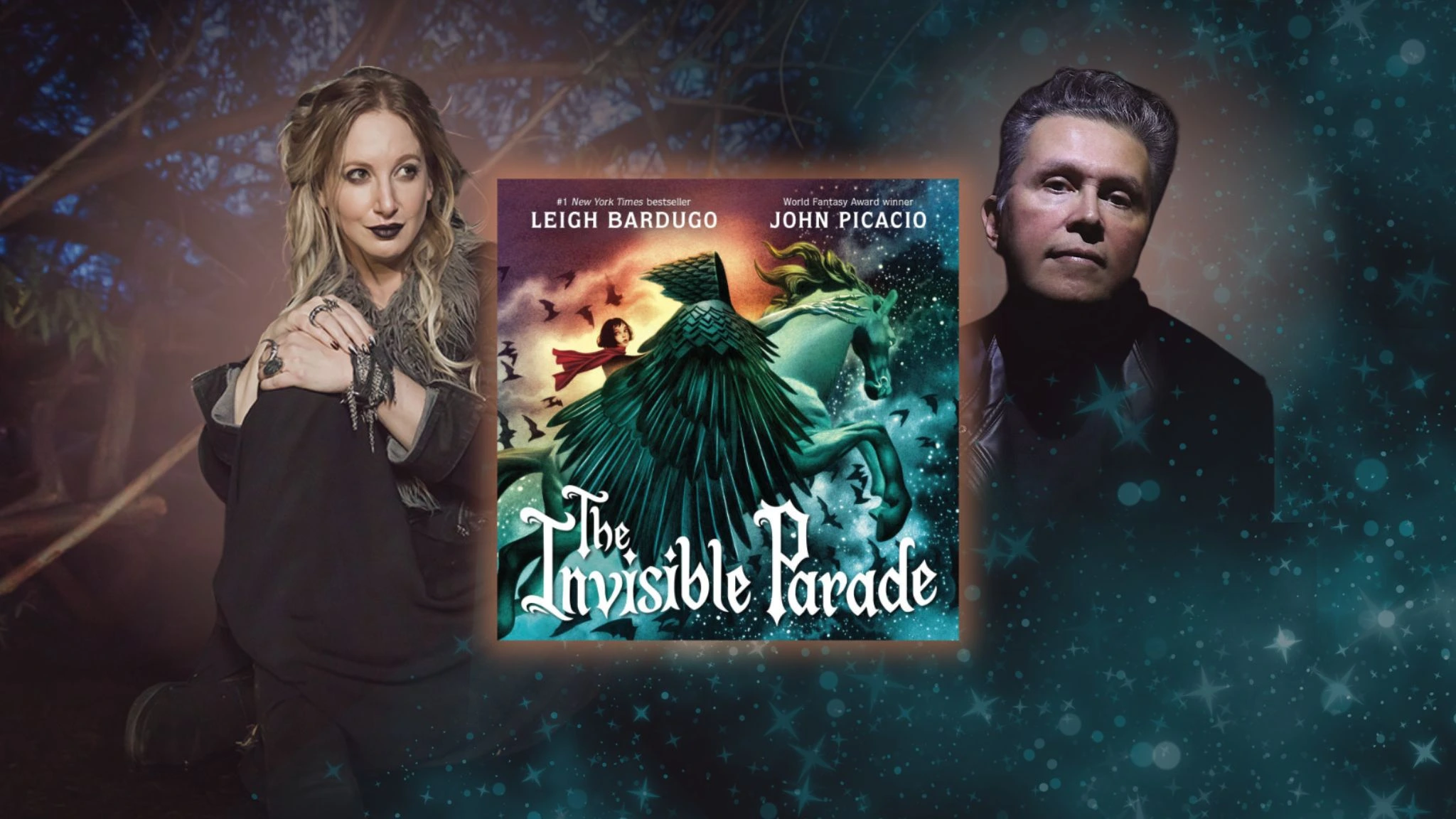
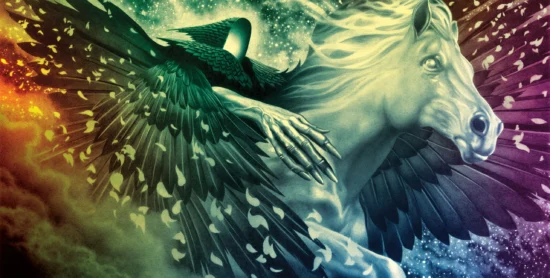
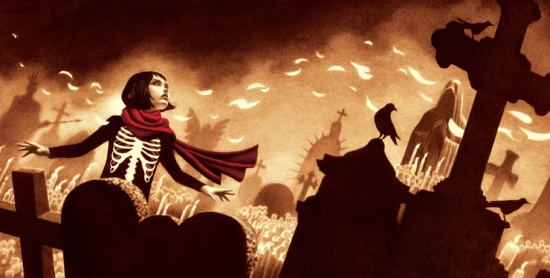
It’s not every day that you come across a story that gives you chills from the book blurb alone. But with these haunting words, The Invisible Parade, written by Leigh Bardugo and illustrated by John Picacio, entices you into a narrative full of ghosts and ghouls from the other realm. It invites you to step into an old cemetery and watch the mysterious beings that dart between the crumbling gravestones on the night of Día de Muertos.
But The Invisible Parade extends beyond the fall season’s spookiness to tell a story of grief and healing. It follows Cala, a young girl who’s struggling to participate in Día de Muertos after the passing of her beloved grandfather. How can she celebrate when there’s this emptiness inside? It’s only through a rather unexpected encounter that Cala starts her healing journey and can grasp what the holiday is truly about.
In case you can’t place the familiar names of the book’s creators, here’s a refresher.
Bardugo is the award-winning author of bestsellers like the Shadow and Bone trilogy, Six of Crows, Ninth House and more. Her books are a beloved staple of bookish internet spaces, and as she prepares for the release of her next highly anticipated novel in 2026, she shows no signs of slowing down her breakneck pace of delivering smash hits to the publishing world.
Picacio, meanwhile, is a lauded illustrator, recipient of both the World Fantasy Award and Hugo Award and founder of the Mexicanx Initiative, which strives to promote the scope of Mexican and Mexican American creators into the awareness of fantasy and science fiction. He’s captured the likenesses of characters from the Game of Thrones universe, Star Trek and X-Men, and illustrated countless book covers.
So you can imagine our excitement as we got a chance to talk to them about The Invisible Parade — its creation, its evolution and what it means to them on a personal level. So let’s get into it!
Cammy, BookTrib Social Media Team: Congratulations to you both on the new release! Let’s go back to the beginning. What was the catalyst for this project?
Leigh Bardugo: John and I met at Worldcon back in 2011. I hadn’t been published yet, and he was an absolute superstar, but he treated me as a peer. We stayed in touch, always supporting each other’s projects. Still I was surprised — and a little skeptical — when he said he had an idea for a book we should write together. Then he said, “It’s The Wizard of Oz set in a graveyard,” and my brain caught fire. I had been trying to find a way into a story about grief but everything I came up with was so somber, so bleak, and honestly a little pretentious. Then along comes John with this beautiful adventure and it all clicked.
John Picacio: I’ve spent my career creating cover art for science fiction, fantasy and horror books, but I’ve always had stories in my head too. And then back in 2016, this story about a grieving girl visiting a graveyard on the night of Día de Muertos walked into my head, along with the four riders that she would encounter. And I wanted Leigh to do it with me because I trust her, she makes me laugh, and I think she’s one of the great American writers — not just in fantasy — but across all fiction. If we could somehow find room in our schedules, I thought we might be able to create something truly special.
 Leigh, it’s an understatement to say that your name is one young adult & adult fantasy readers are familiar with! What inspired you to pivot from and write something for younger readers?
Bardugo: I don’t think of it as a pivot, really. We hope this story will help kids and families talk about grief and some of the fears that come up around loss. But death is tough to discuss at any age. It’s why so many people feel isolated when they’re coping with grief. Friends go silent at the moment they’re most needed — not because they don’t care, but because they’re not sure what to say or how to reach out. Cala’s story is a kind of offering to people who are experiencing the loneliness of loss and the people close to them who want to connect.
John, you’ve worked on plenty of book illustrations, but this is your first time illustrating one of your own stories. How does this increased creative control make things different from your usual role as an artist?
Picacio: Creating cover art feels like sprinting to me. I’m moving at high velocity from book to book, drawing pictures that I hope will connect readers with stories. Creating a story is a marathon. Both processes are personal, but creating this story with Leigh was putting my soul onto the page. We both did.
Introduce us to the main protagonist of The Invisible Parade, Cala. What’s she dealing with at the start of this story, and how does she transform through the story?
Bardugo: Cala is grieving her grandfather’s passing, and as her family prepares to honor and celebrate him on Día de Muertos, she just can’t join in. John did a beautiful job of showing Cala’s loneliness, not just in her expressions and body language, but in the color missing from her world. To rejoin the world of the living, she’ll have to find the courage to enter those cemetery gates and to literally look death in the eye.
 The Invisible Parade draws heavily on the traditions of the Mexican holiday Día de Muertos. John, from reimagining the classical card game Loteria to founding The Mexicanx Initiative, you’ve incorporated your Mexican heritage into your art and career before. How does it feel to add The Invisible Parade to the list, this time in a narrative form?
Picacio: It’s a whole different game because it’s such a tight collaboration with Leigh, but it’s still just as true to the heritage as everything else I’ve done. It’s the first picture book for both of us, and I feel like this was a life-changing experience because I’ve learned that I want to keep telling book-length stories.
Like The Invisible Parade, unsettling stories like Coraline and The Nightmare Before Christmas have delighted their young audiences — the children yearn for the creepiness! But how do you find the right level of haunting imagery and descriptions without tilting into true nightmare-inducing horror?
Bardugo: With a little bit of humor and a lot of magic. Kids don’t just love Halloween because of the candy. It’s a chance to meet a monster and best it or to become a monster and let yourself be a little beastly.
Picacio: My daughter is still a kid, but she’s one of the most brutal art directors you’ll ever meet. I trust my instincts, and I trust Leigh’s, but my kid saw everything before almost anyone else did. And I knew if the designs and drawings for our story could charm and intrigue her, then they might have a chance to charm and intrigue the larger world.
 There’s a misconception that crafting a children’s or middle-grade book is all smooth sailing, given the shorter page count and younger target audience. What’s a challenge to the process that people might not expect?
Bardugo: I always tell new authors to read poetry because it’s a form that requires economy of language, and that also lets language do fresh, surprising things. I think picture books are similar, and they’re so much tougher than novels because you have so little space to get big ideas and nuance across. It doesn’t matter if you’re writing a picture book about grief or shapes; you’re going to be thinking about every word differently.
Picacio: I think kids are the toughest, most honest critics. The ones I know suffer no fools when it comes to books and films. But from the beginning, I think Leigh and I knew we were creating a truly all-ages story. I think kids will read this story on a certain level, but adult readers will grasp resonances that the kids don’t. I think adults will read the book in a different way, at different stages of their lives.
How do you envision readers engaging with this book — from kids to parents, teachers, or caregivers? What conversations would you like The Invisible Parade to spark?
Picacio: I think the story might provoke kids to ask their guardian figures about life and death, and that’s not a bad thing. I think it’s healthy. Sometimes people don’t know what to say to a friend when their loved one passes, or when to say it. And that can be isolating for that person who is left behind, and maybe a story like ours can bridge that chasm that separates us when we need community the most.
 Bonus question: Can we expect to see any more of Cala and the world of The Invisible Parade? Or is there anything you guys can give us about what projects you might be onto next?
Picacio: Leigh and I wrote The Invisible Parade to stand on its own. The world will decide how well it does. Their response is out of our control. This was a beautiful dream collaborating with her to create this story, but we’re both solo artists, and now we go back to our solo careers, and keep marching. But I would never close the door on collaborating with her again. We’re very proud of The Invisible Parade, and we hope readers will love it as much as we do.
Bardugo: I admit I have an idea for where Cala’s next adventure may take her, but as John said, it really all depends on the readers now. We put everything we had into this story. That’s all we can ask of ourselves as authors. Then you get to see where the readers take the next chapter.