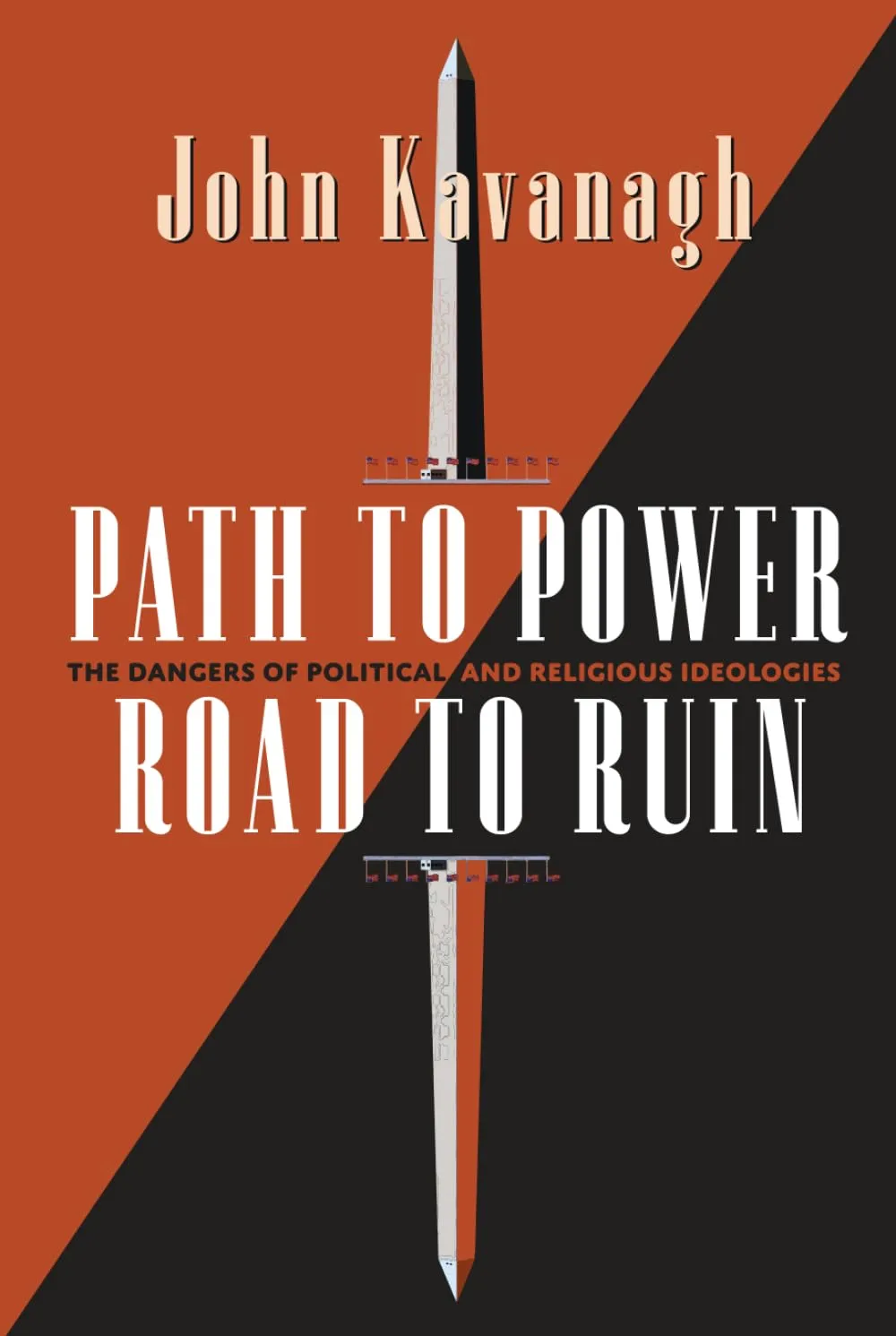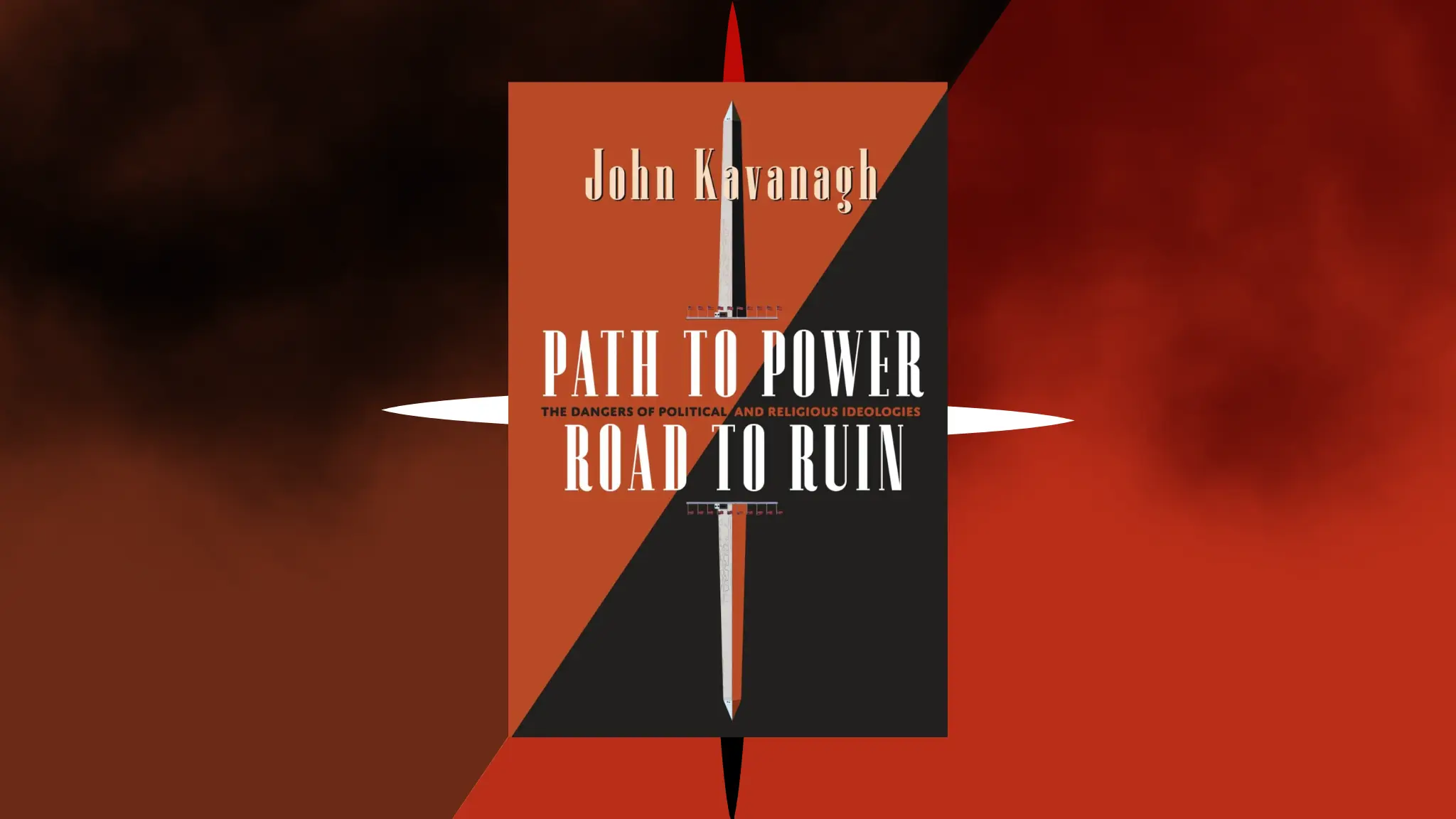
Path to Power Road to Ruin by John Kavanagh
The insidious nature of political and religious ideologies — and how people can avoid falling into their snares — is the focus of Path to Power, Road to Ruin by John Kavanagh.
Ideologies are powerful belief systems that, at their best, help humanity link multiple beliefs and ideas into a more comprehensive view of the world; a roadmap to the best way to live, as it were. But at its worst, political and religious ideologies are the powerful tools that elites use to bend society toward their own view of the world, to devastating consequences.
The Slippery Slope to Destruction
Ideologies, Kavanagh argues, “consistently produce bad outcomes.” And in less than two hundred pages, he lays out in grim detail how unprincipled leaders have used “reimagined” ideologies to gain control over people and “help sell and justify” their national agenda and programs. Kavanagh looks at the examples of today’s political leaders in Russia and China — Vladimir Putin and Xi Jinping — as textbook models of authoritarian actors who manipulate their people through fear, disinformation, an “us/them” framing of issues and an emotional appeal to an illusory better past that only they can bring back.
If this sounds familiar, it is. “We, in America, are headed down the same path,” Kavanagh warns, that Russia and China are on, unless people refuse to uncritically accept false narratives and, rather, apply their own analytical thinking to discover the truth of an issue. When discussing America’s predicament under President Donald Trump, Kavanagh obviously speaks more about the ideological right, but his analysis of history is a balanced condemnation of left-wing totalitarian movements and political systems (communism, for one) that realized some of the bloodiest moments in human history.
Kavanagh categorizes the destructive effects of human belief systems upon society, the most significant of which is the mass killing of human beings. He cites an eye-popping statistic to underscore this point: throughout history, there have been more than one hundred occasions where “one hundred thousand or more people have been murdered at one time and place, and, in half of those cases, the death toll was in excess of one million people per incident.” Ideological beliefs are almost always to blame, he argues.
History of Ideologies and How to Combat Them
With a blend of psychology, sociology, history and political science, Kavanagh digs into the motivations of both dictatorial leaders and the large swathes of people who are hypnotized by a pre-formed, easy-bake way of viewing the world … to their own detriment. He shows step-by-step how ideologies work, how the powerful employ them, and how and why people fall for them.
He identifies the three “underlying drivers” common to the world’s most prevalent ideologies (Communism, Christian or Islamic theocracies, Imperialism and Nationalism, to name a few) that relate to human needs on an existential, epistemic and relational motivational level. This leads to the three “solutions” that fall under the umbrella of utopianism, absolutism and supremacism.
In simple and logical narration, Kavanagh gives an in-depth analysis of utopian, absolutist and supremacist thinking that “are of limited validity” before closing his study with a reflection on the ideas currently plaguing the American body politic under the Trump administration, reminding readers that “living in a democracy is a rare gift” that is not guaranteed. The portrait Kavanagh paints is not an encouraging one, but he closes on a hopeful note that ideologies can “weaken and even disappear in the face of real-world pressures.”
The Importance of Analytical Thinking
Along with making a case for alternative philosophical systems like Buddhism and humanism, Kavanagh promotes arguably the best inoculation against ideologues and their false narratives: a return to tried-and-true analytical thinking.
Path to Power, Road to Ruin is a smartly written and helpful primer on the baleful influence of political and religious ideologies and how people can — and should — assess an ideology against facts and reality before believing it.
About John Kavanagh:
 John Kavanagh is the former CEO of Marketing Corporation of America (Interpublic Group). Concerned with the rise of totalitarianism globally, he has spent a decade researching ideologies that empower dictators. Drawing on his analytical skills and historical knowledge, Kavanagh authored, Path to Power, Road to Ruin. A graduate of Yale University with a master’s degree from Columbia University, he lives in Connecticut.
Buy this Book!
Amazon